
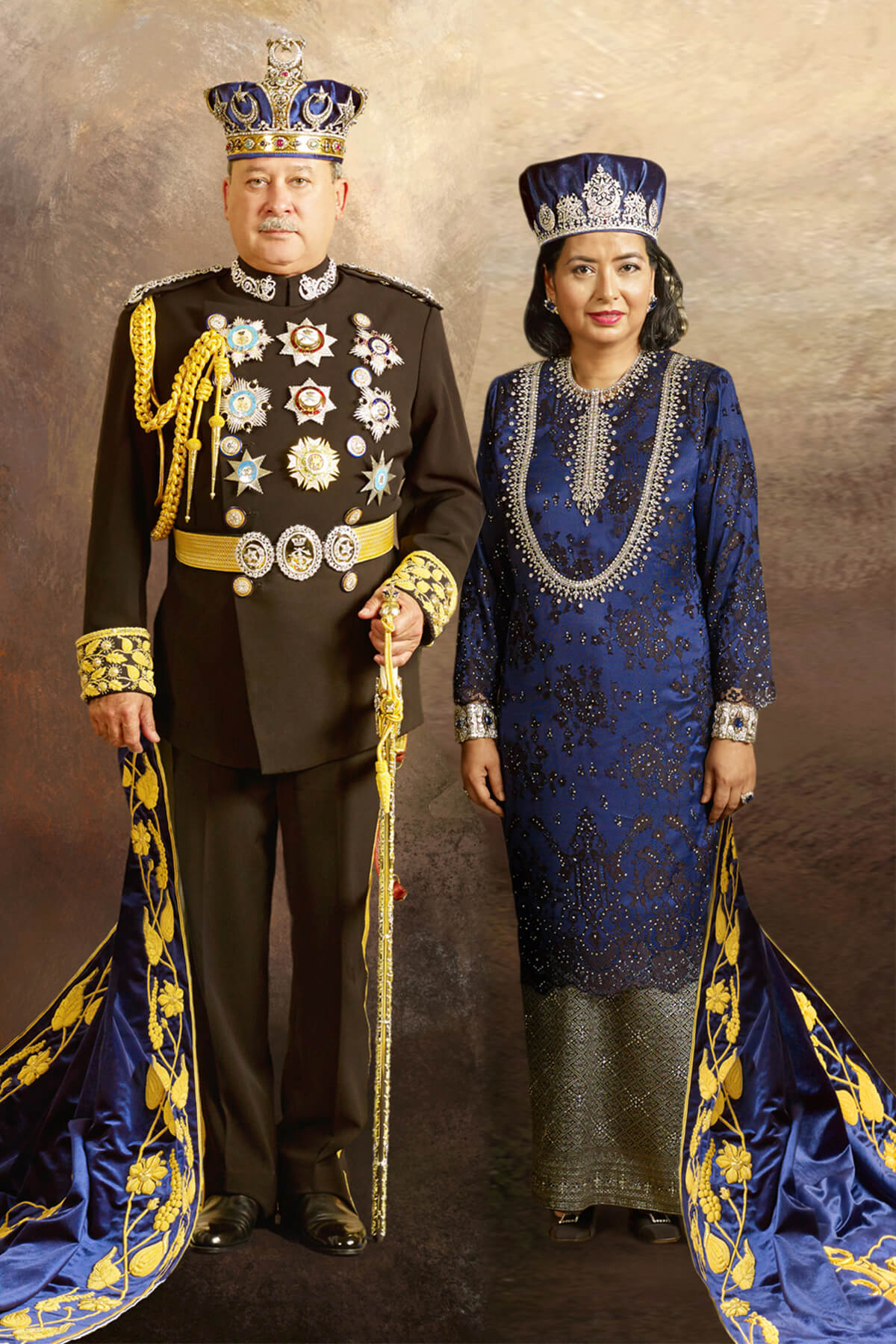
The Sovereign

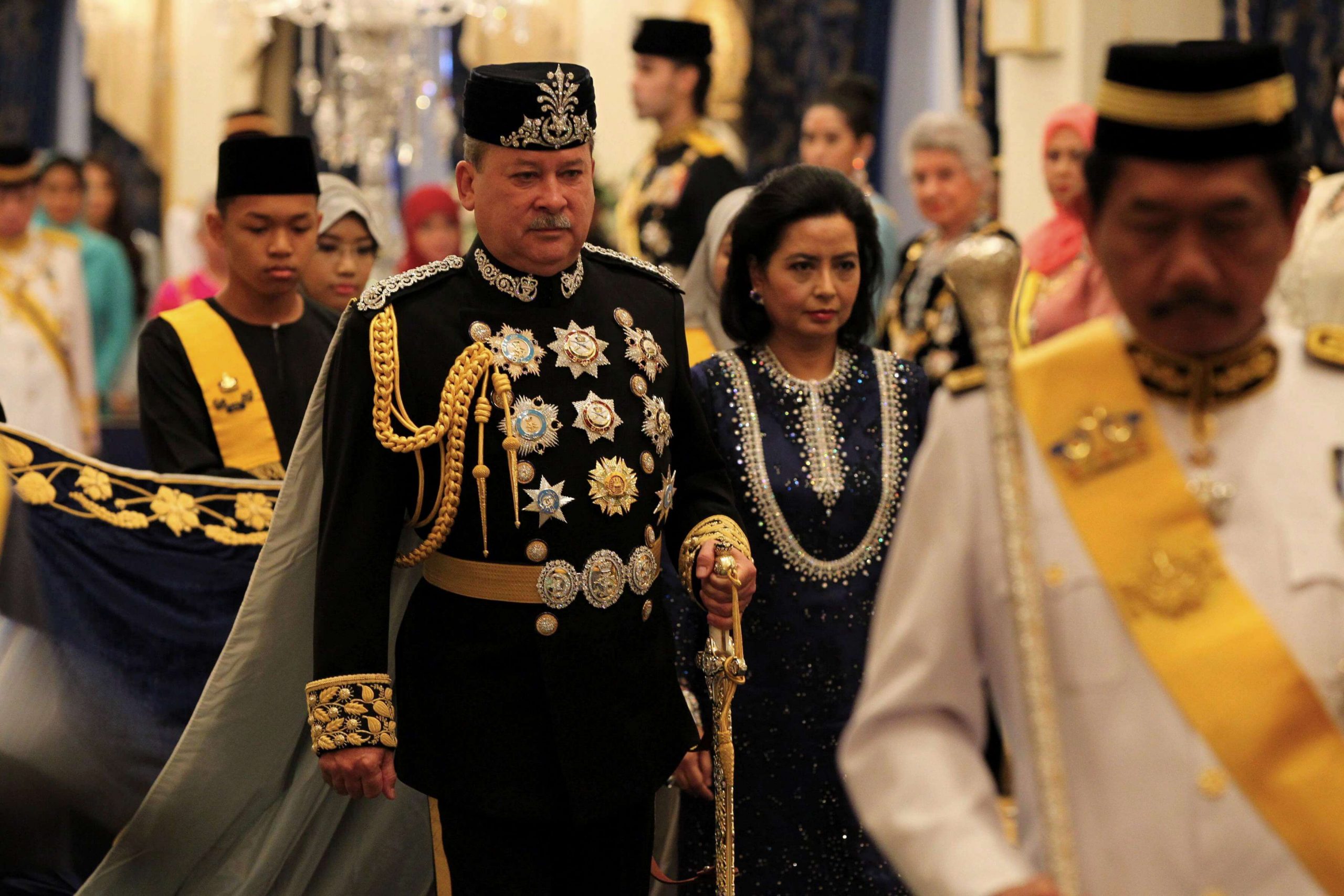
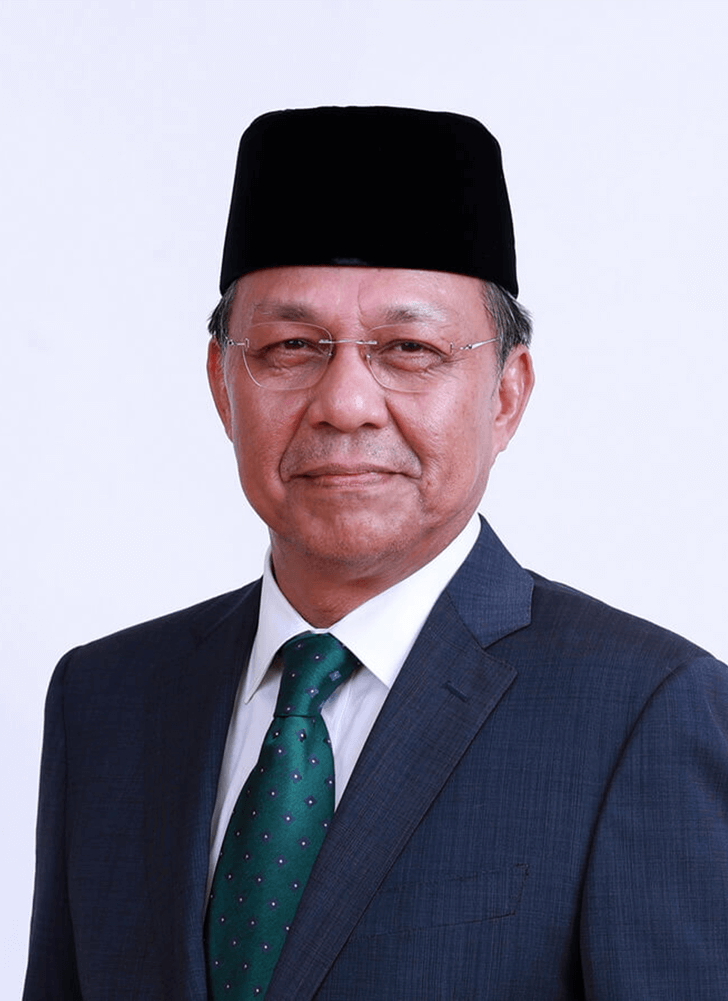
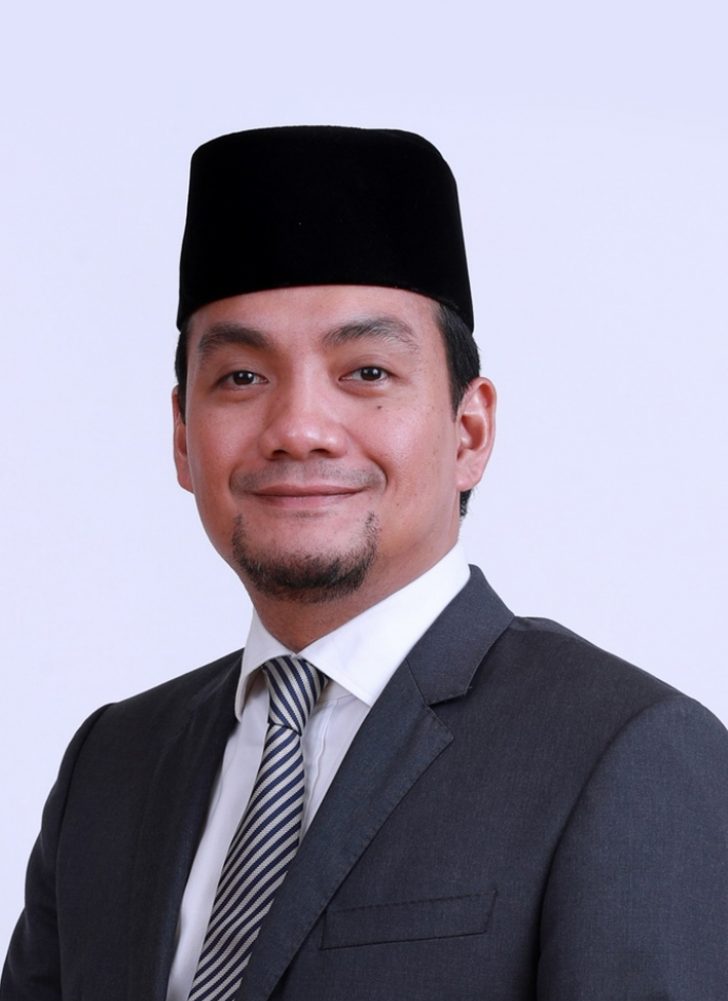
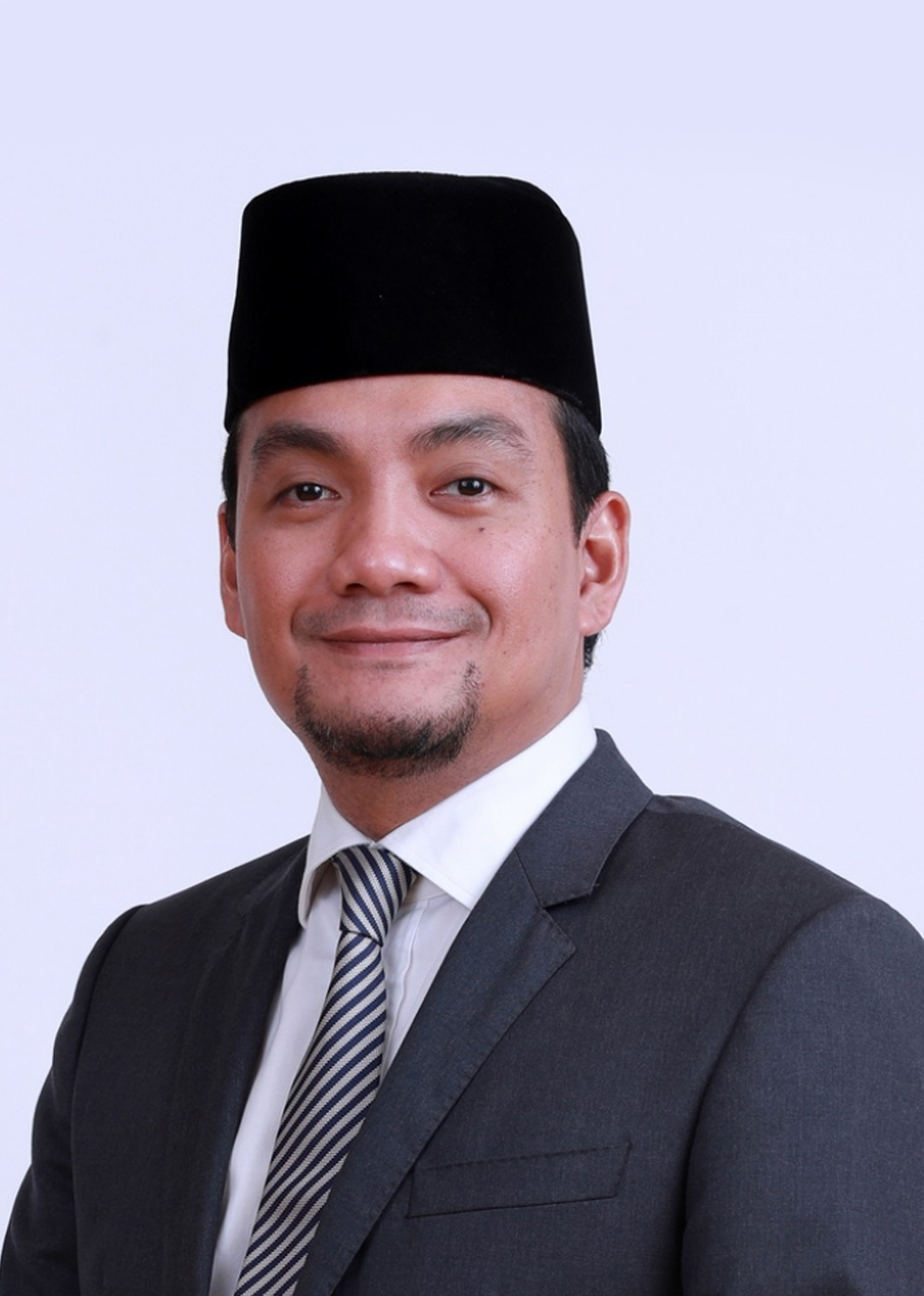
HM Sultan of Johor and Queen of Johor. (Source: Royal Press Official)

Bahagian Pertama Undang-undang Tubuh Kerajaan Johor 1895

Article 1 of the First Part of the Johor State Constitution defines the expression “Sovereign” as and includes “Ruler”, “Sovereign Ruler”, and “Sultan” and Sultan and Sovereign Ruler of the State and Territory of Johor.

Articles 2 and 3 provide the Sovereign shall be a person of the Malay race, of royal blood, a descendant of the Johor Sovereign, a male and of the Muslim faith. The person must be a descendant of the body and flesh and blood of Sultan Abu Bakar, genuinely and lawfully begotten, and a son, grandson, great-grandson and so on of the male line from one generation to another.

The Constitution provides for a patrilineal line of succession. The person to be confirmed as Sovereign or Heir must be of royal blood, even though his mother may not be of royalty. This provision reflects the wisdom of Abu Bakar in the choice of marriage and instances where there are no legible females of royal blood.

The coronation ceremony of HM Sultan Ibrahim was completed with the placing of the Crown by Sahibus Samahah Mufti of Johor. (Source: Royal Press Official)

Further Requirements For A Ruler And Heir

  • The firstborn male of the Ruler truly and lawfully.
  • Begotten from a mother that may either be of royal blood or otherwise.
  • Of sound mind and not handicapped.
  • Devoid of great and serious defects such as insanity, blindness, dumbness or possessing some qualities derogatory to the quality of a Sovereign, and would not be permitted by Islamic laws to become a Sovereign.
  • Must be educated and knowledgeable, possess commendable reputation, character, behaviour, and understanding with disposition and deportment that are good and praiseworthy.
  • Free from criminal, civil, or Syariah charges.
  • Not an un-discharged bankrupt.

HM Sultan and Permaisur responding the prayer recited by the Deputy Mufti of Johor. (Source: Royal Press Official)

Confirmation Of The Sovereign

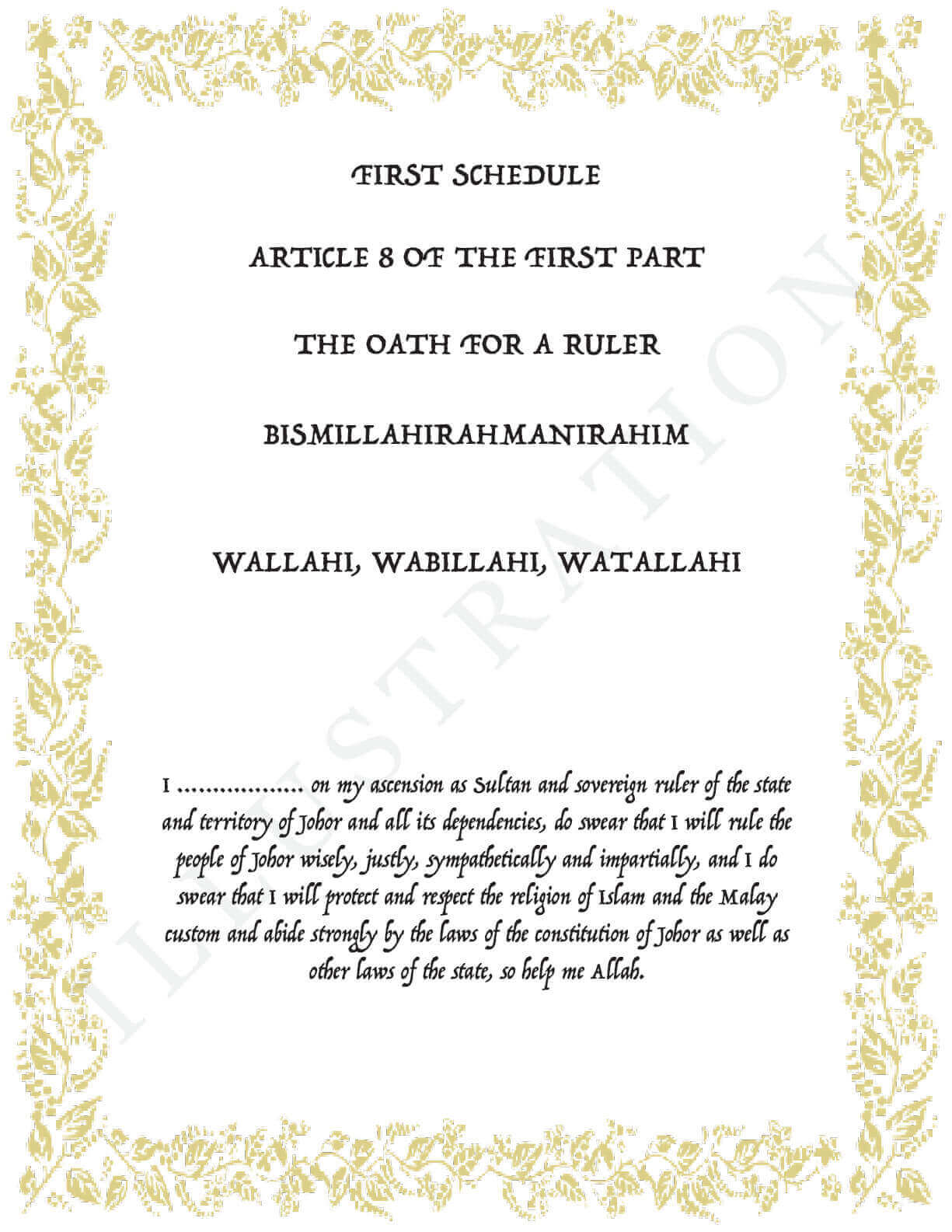
Article 4(1) provides that on the death of the sovereign, the Council of the Supporters of the Country shall meet and confirm the Heir Apparent as Sovereign. The decision of the Council may be by majority vote or unanimous. Immediately after that, the Sovereign is to take the ‘Oath For A Ruler’, held in the Throne Room, in the presence of the Council and witnessed by members of the Royal Family.

Regency

The Constitution provides for the creation of a regency under certain conditions so as to expedite the performance of royal functions.

Article 9(1)(a) provides if at his accession to the throne is under the age of 21 according to Muslim reckoning, the Council of Royal Court shall appoint a Council of Regency consisting of three members who shall be of the Malay race, of the Islamic faith and subjects of the Sovereign. Members of the State Executive Council or the State Legislature are not eligible.

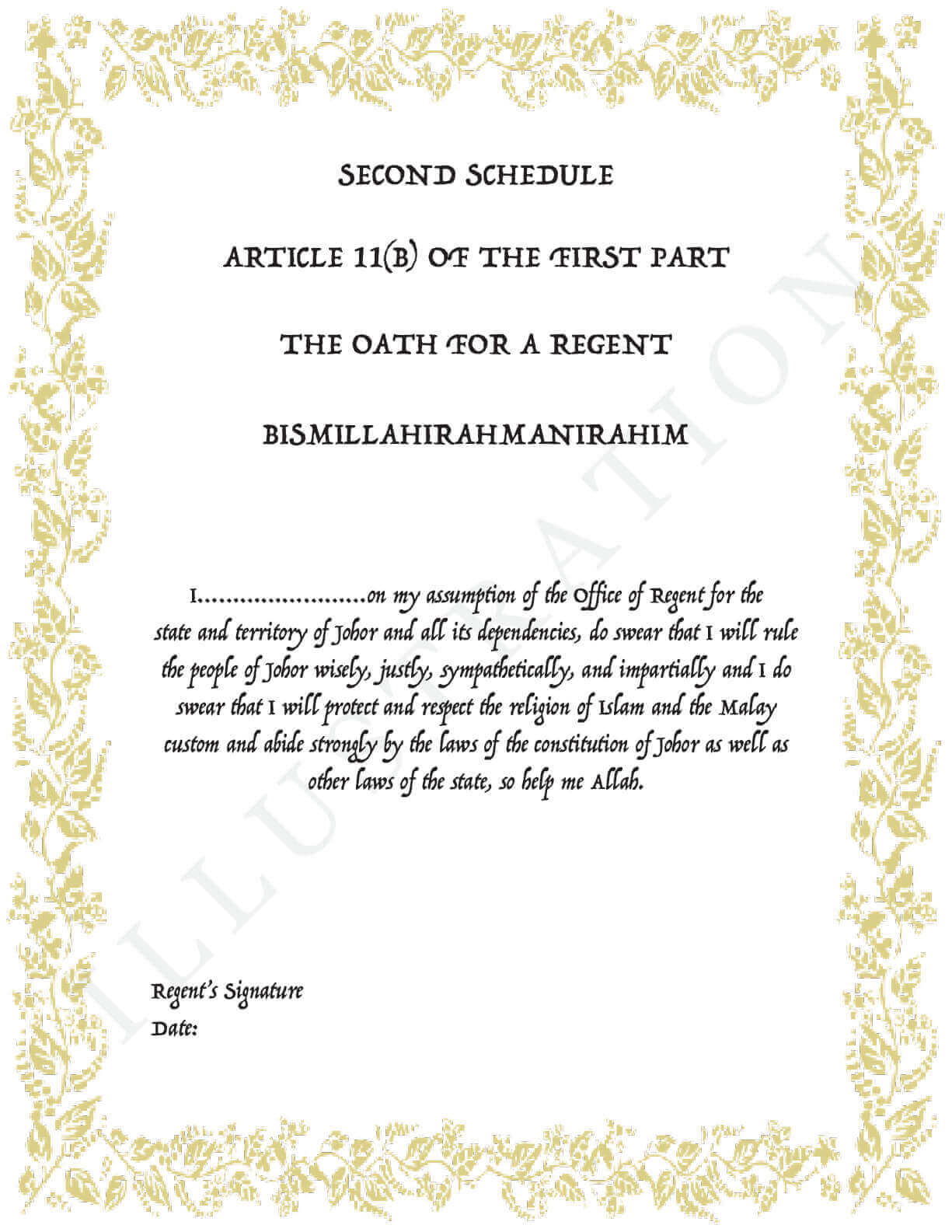
Article 9(1)(b) provides if the Council of Royal Court declares in writing that it is satisfied by evidence of physicians that the Sovereign is, by reason of infirmity of mind or body, incapable for the time being of performing royal functions, the Council shall appoint a Regent.

Article 9(1)(c) and (d) provides in the event the illness does not amount to the infirmity of mind or body, or absence from the State, or in the event the Sovereign is elected as Paramount King, or for a period exceeding fifteen days exercising the functions of the Paramount Ruler, the Sovereign with the advice and concurrence of the Council of Royal Court shall by instrument under his sign manual and the State Seal appoint a Regent.

The Council Of The Supporters Of The Country

Article 27 stipulates the Menteri Besar, or if he is absent from the State or illness, the President of the Council of Royal Court (Yang diPertua Jumaah Majlis DiRaja) shall be appointed as President of the Council. The Council consists of Councillors of the Royal Court (Ahli-ahli Penasihat), Johor Dato’ of the Muslim faith, Orang Kaya and Penghulu Besar. Only members of the council of the supporters of the country may attend the meeting of the council. Johor Dato’ of the muslim and are subject of the Johor ruler but who are serving as government official or members of the executive and legislative council of the state may attend the meeting but they have no right to vote.

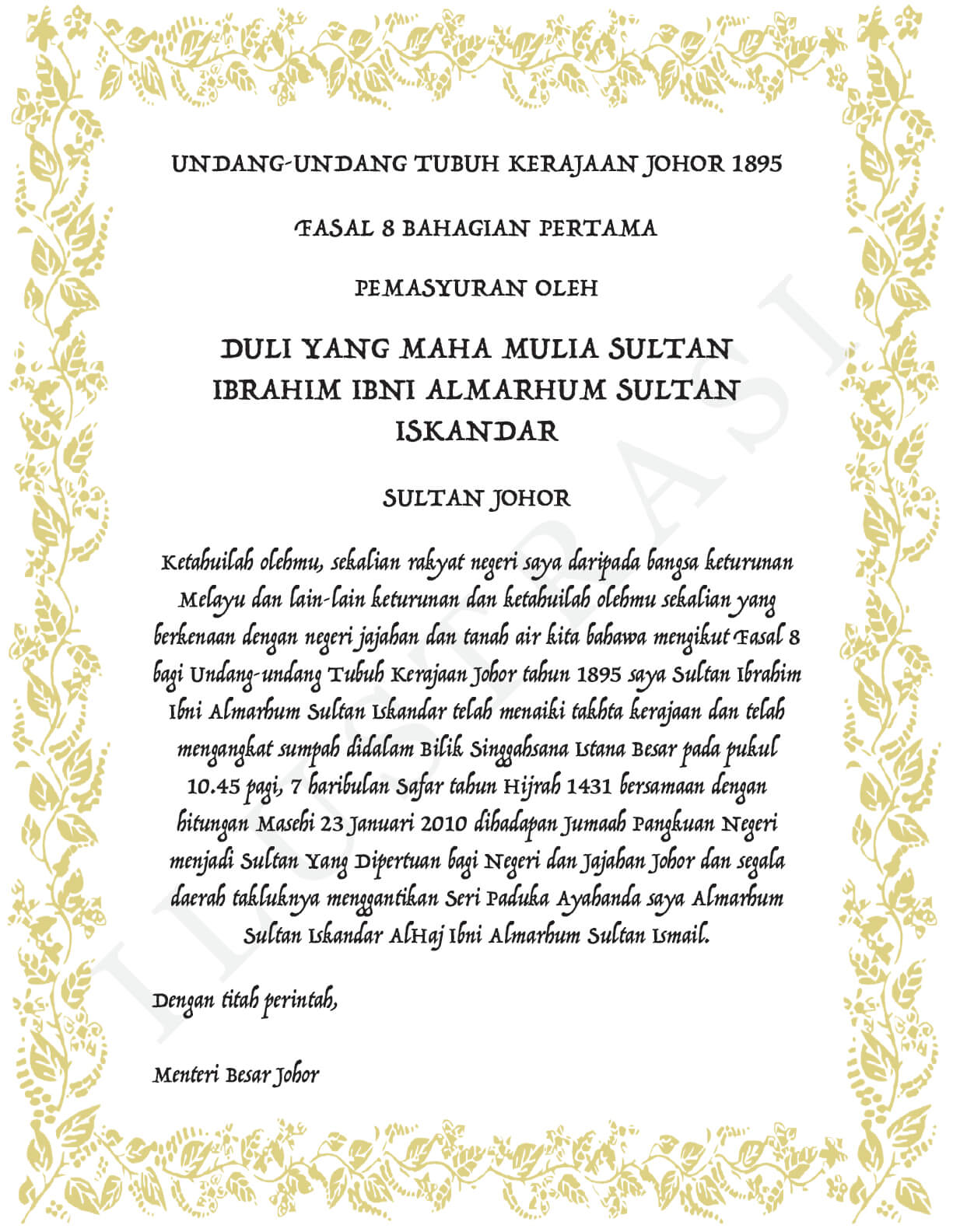
Prior to the royal burial, the Menteri Besar proclaims the Heir Apparent as Sovereign at the Grand Staircase (Tangga Agong) of the palace at Istana Besar.

The reading of the Oath for a Ruler and the Proclamation by the Menteri Besar fulfills the legality of the installation of the Sovereign. The coronation may take place at any time the ruler so decides.

The Coronation Ceremony of DYMM Sultan Ibrahim (Sumber: Royal Press Official)

The Sovereign’s Authority

The State Constitution marks the beginning of a democratic government. Article 2(1) of the Second Part states the executive authority of the State is vested in the Ruler, but executive functions may be conferred on other persons or authorities. Article 2(2) states the executive authority of the State shall be expressed to be taken in the name of the Ruler.

Article 7(1) of the Second Part stipulates in the exercise of his functions under the constitution or any law, and the Ruler shall act on the advice of the State Executive Council or a member of the Executive Council.

Article 7(2) of the Second Part provides the Ruler may act at his discretion in the performance of the following functions:

  • The appointment of a Menteri Besar
  • The withholding of consent to a request for the dissolution of the Legislative Assembly
  • Any function as Head of Islam or relating to the custom of the Malays
  • The appointment of an Heir or Heirs, Consort, Regent or Council of Regency
  • The appointment of persons to Malay customary ranks, titles, honours and dignities
  • The regulation of royal courts and palaces

List of the First to Nineteenth Chief Minister of Johor

The Sovereign may act with the advice and concurrence of the following authorities other than the State Executive Council:

  • The Council of Royal Court may offer counsel and advice to the Sovereign on all matters in which the Sovereign, or the royal house or any member thereof may be concerned, including the Sovereign as Head of Islam, or relating to the custom of the Malays, the regulation of royal courts and palaces, and the appointment of Consort, heir or heirs, regent and council of regency.
  • The Pardons Board advises the Sovereign on granting a pardon, reprieve or respite in respect of any offence committed in the State.

The Sovereign As Head Of The Religion Of Islam

Article 57 of the First Part states the religion of Islam is the Religion of the State.

Article 7(2)(d) of the Second Part stipulates the Sovereign may act in his discretion any function as Head of Islam such that the religion of Islam shall continuously and forever be acknowledged as the State Religion. Nevertheless, all other religions are allowed to be practised in peace and harmony by the people professing them in all and every part of the State.

The State Mufti and the Islamic Religious Council may make recommendations and advice to the Sovereign on matters relating to the religion of Islam, including the administration and management of tithes, religious education, certification of missionaries, the appointment of Imams, officials conducting the solemnisation of marriages, management of mosques etc.

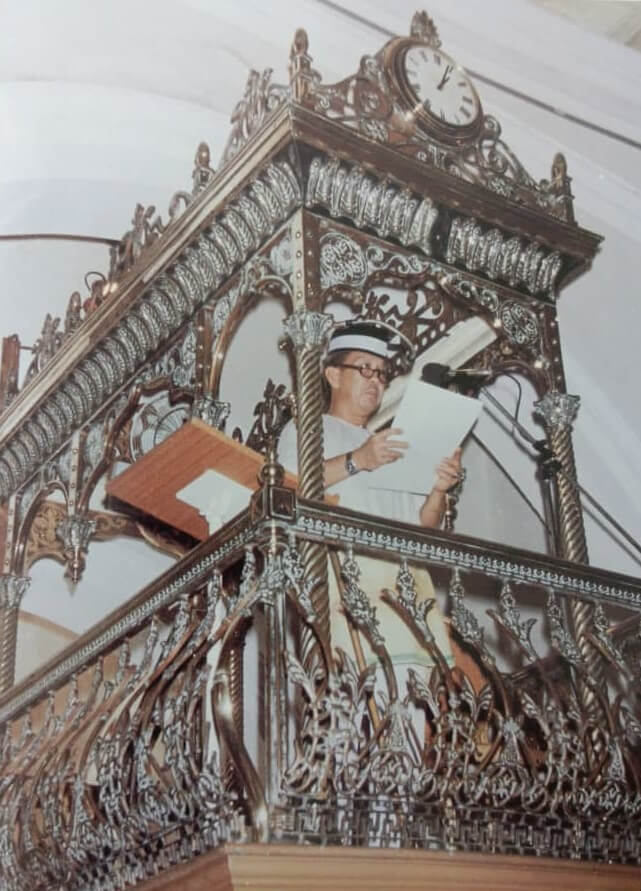
HM Sultan Iskandar delivering a Friday sermon. (Source: The Royal Abu Bakar Museum)

Anda tidak dibenarkan menyalin semula kandungan ini

en_GBEnglish