

Johor’s cultural heritage has been enriched since 1528 during the reign of the descendants of the Melaka Sultanate. Being a maritime nation, Johor was exposed to the various cultures, practices and beliefs brought by traders and missionaries from Europe, the Middle East, India, China and the Far East. The influence of Islam and Western culture introduced by the British impacted Johor’s socio-politics, economy, and administration and paved the way to modernity. Native and feudal palace culture, including food, clothing and the art of paying homage to royalty, were replaced by a combination of Malay, Islamic and Western cultures and rituals that remain relevant to the present day. The development of an intelligent mind of the people through education, in particular English education, was advantageous to the effective administration under Sultan Abu Bakar.
Johor’s Traditional Attire
Johor’s Traditional Attire
Among the cultural features absorbed by the Johor Sultanate is clothing. Human civilization shaped its history of attire. Clothing is a human need to protect against the vagaries of the weather that may cause bodily harm, adapt the body to temperatures, maintain dignity and provide comfort and ease of movement. Traditional attire, not fashion, is a heritage that reflects society's civilisation and shapes its culture through design, fabric, patterns and colours. Clothing may be regarded as a symbol of the status of rank, identity, beliefs and religious rituals. The uniqueness of Johor’s traditional attire, introduced by Sultan Abu Bakar 160 years ago and improved with time, remains relevant to the present day. The Johor attire, better known as Baju Kurung, is defined as a fashion of clothing that encloses or confines the body. The dress for males and females have similar features, like flat round collars fashioned and finely hemmed in the design of the eel’s bones fastened with a single stud, but differ in designs and the art of wearing.
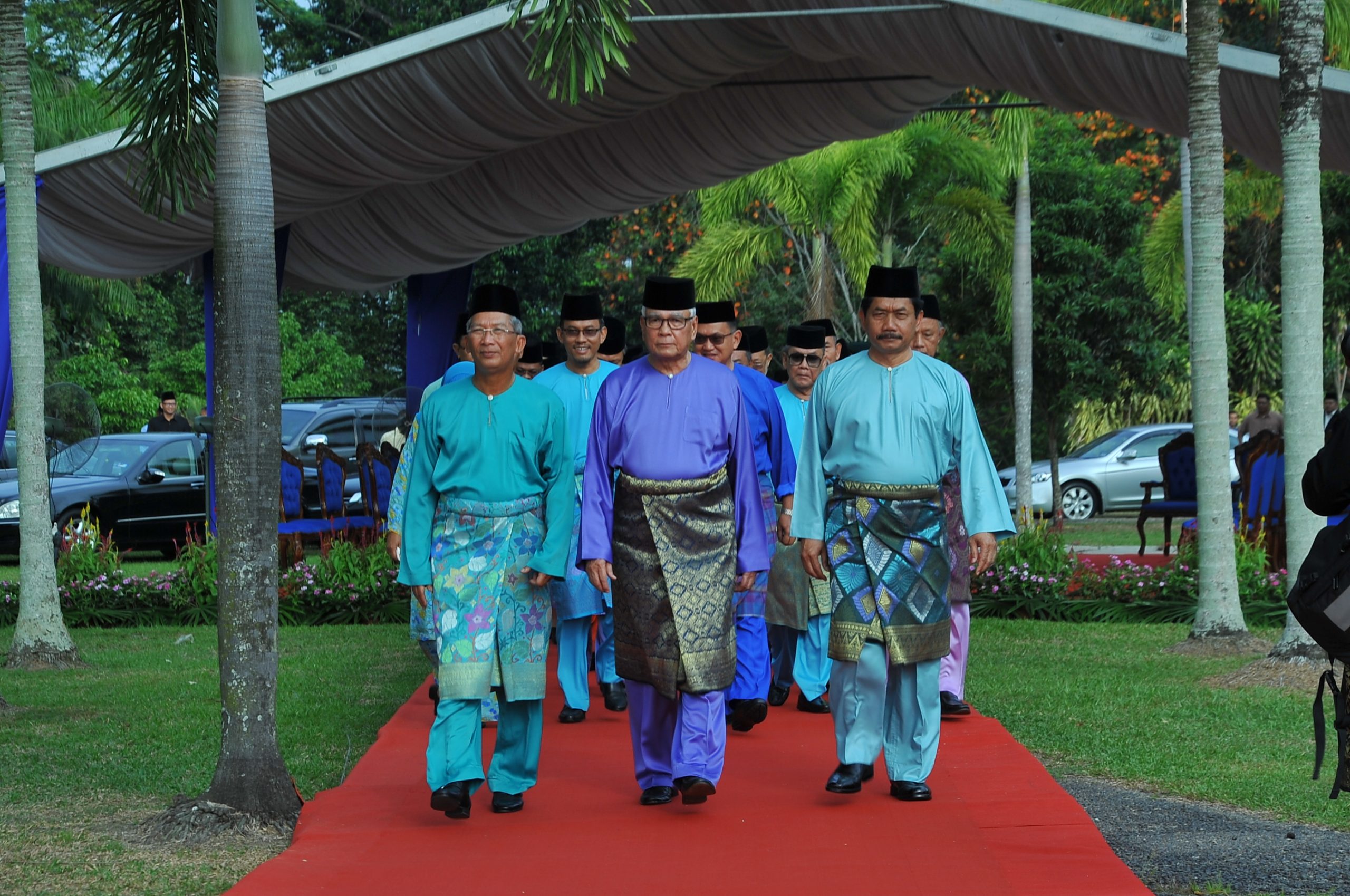
Members of Royal Council attired in Baju Melayu Telok Belanga. (Source: The Royal Abu Bakar Museum)
Johor’s iconic attire inspired by Maharaja Abu Bakar is made from thin cotton fabric. It is loose-fitting, roomy and comfortable to wear in the local climate. The attire was adapted from Indian Muslim merchants. The tunic is long, extending below the waist, and the sleeves extend to the wrists. Abu Bakar created two types of dress. The first has a high collar fastened with two studs and a vent extending to the chest held together with three studs. During the time of Abu Bakar, this fashion was reserved for royalty and nobility. The dress of ordinary people is the second type, with a flat round collar hemmed in the style of an eel’s bones and fastened with a single stud.
Men’s Dress
The Baju Kurung and men's trousers are made from fabric of the same colour and design, with two large pockets at the lower part of the tunic. Sultan Ibrahim added a smaller pocket on the left chest. Malays holding to tradition prefer not to have the chest pocket. The wide, baggy, comfortable trousers extending to the ankles were adapted from the attire worn by Chinese workers. The trousers differ from those worn by the Bugis and the Achenese, which are of thigh length, knee length, or calf length. The present trousers are a Western adaptation.
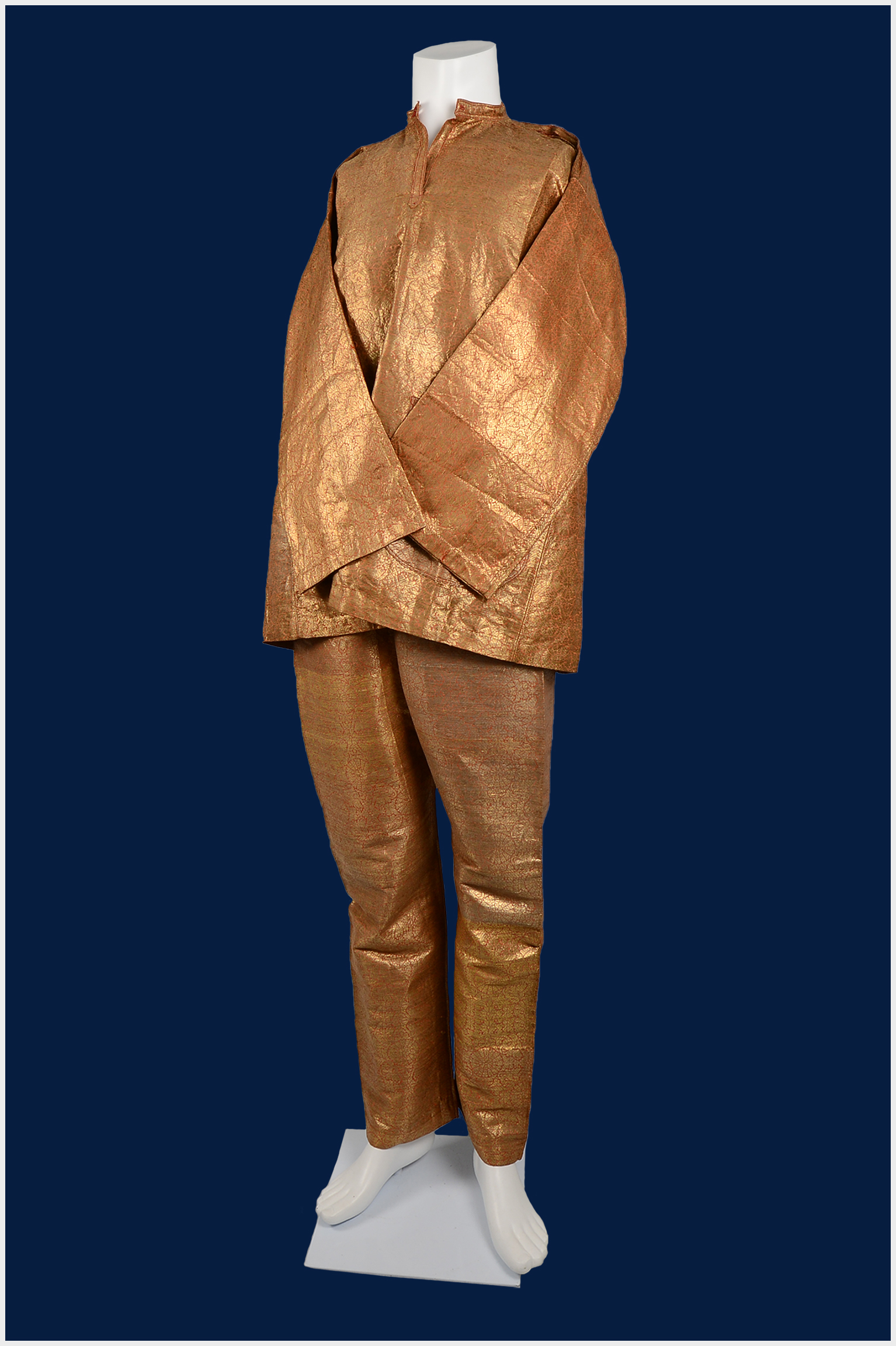
Baju Melayu Teluk Belanga (Source: The Royal Abu Bakar Museum)
In 1982 Sultan Iskandar, not wanting to differentiate the status of royalty and the common people amended the dress code by decreeing the attire with the flat round collar fastened with a single stud be made the official attire for Johor Malays. However, the tunic with the high collar and vent remains popular among the Malay community and is worn during festive occasions, including weddings.
A sarong made from a piece of different fabric, including songket, silk or cotton of different colours and designs and folded to resemble a short skirt complements the men’s dress. It is worn to extend below the knees for a neater appearance. It can be worn either folded neatly over the tunic or under the tunic. In the olden days, only royalty and nobility were permitted to wear the first style, while the latter was for the commoners. However, from 1982 the first style was adopted as the official style of dressing for Johor Malays.
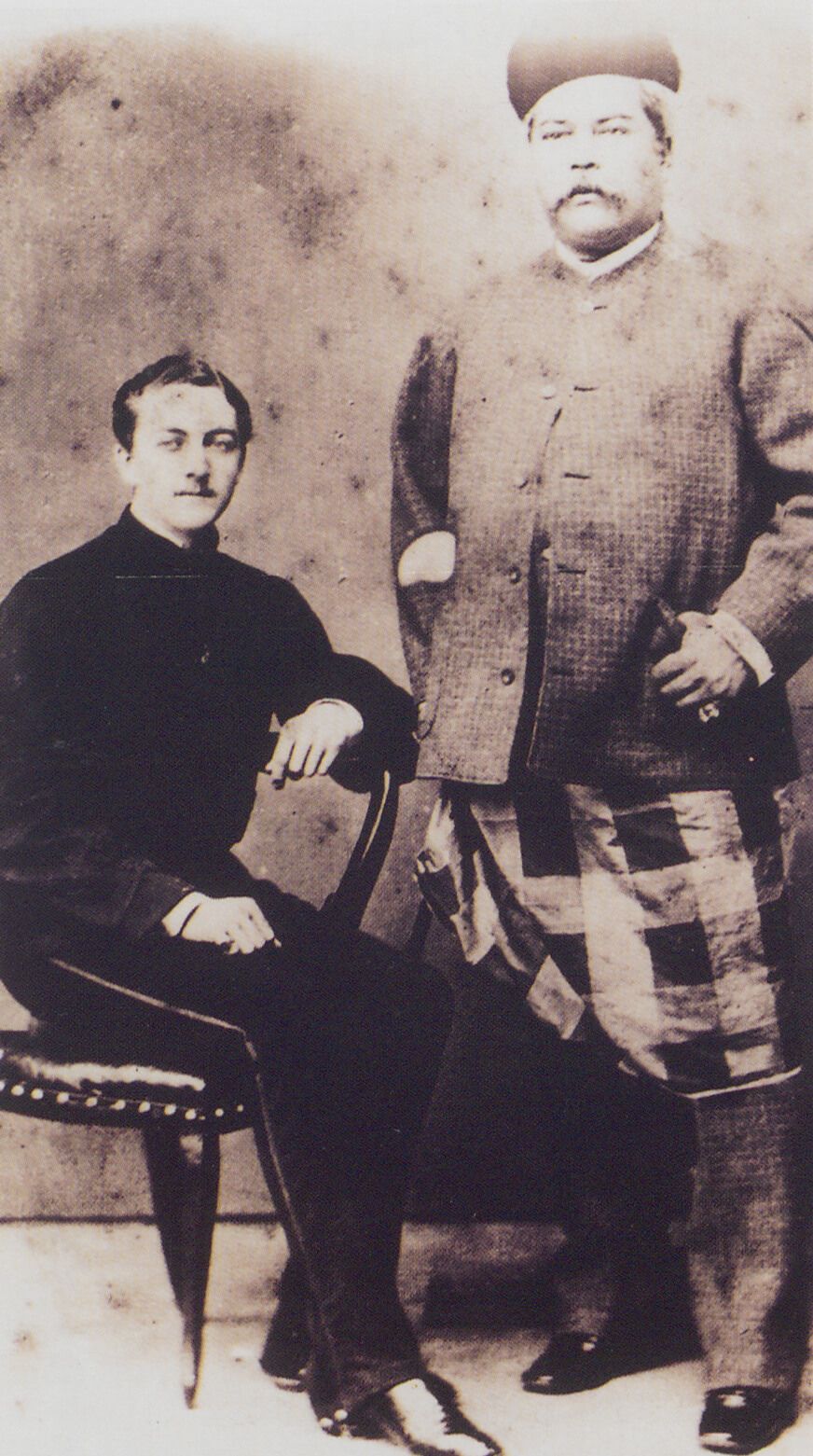
Temenggong Abu Bakar pictured with A.E.H Anson, Governor of the Straits Settlements in 1862. He is the one who coined the term Baju Melayu Teluk Belanga. (Source: Johor Heritage Foundation)
Since the founding of Johor in 1528, twisted head wrappers of various designs made from cotton have been the popular headwear for men. With the influence of Arabs and Indians, the headgear evolved into turbans and low round or elliptical peak less cap. Sultan Abu Bakar chose the peak less made from black velvet as the official headgear. To complement the Malay attire, Abu Bakar introduced black leather shoes and black socks, a departure from the wearing of leather sandals favoured by the Javanese. The shoes and socks make the wearer more disciplined.
Women’s Dress
The dress worn by Malay ladies may be plain or with flowery designs and is slightly longer and extends to the knees. The sleeves extend to just before the fingers. This attire exudes a feminine look and complies with Islamic dress codes. The flat round collarless neck with a front vent is finely hand hemmed in an eel’s bone style and fastened with a single stud.
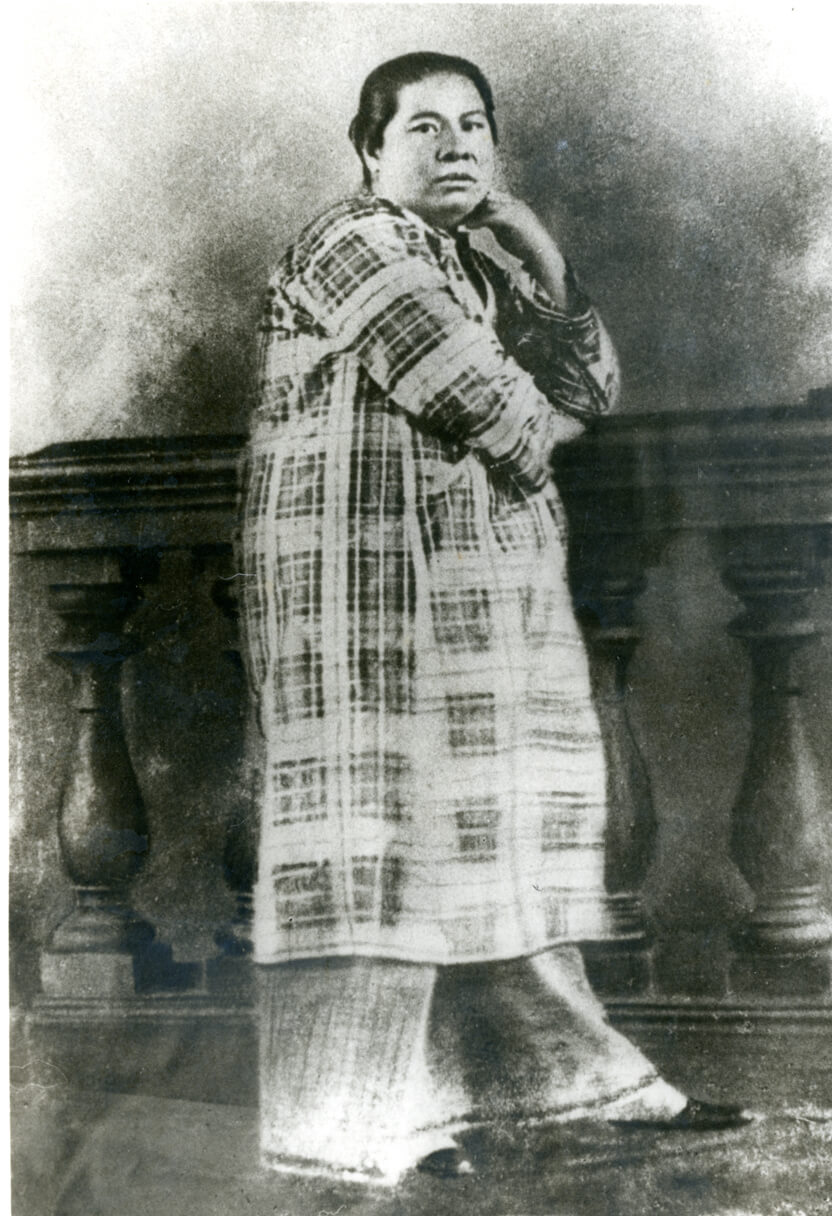
Sultanah Fatimah binti Abdullah (Wong Ah Gew). (Source: The Royal Abu Bakar Museum)
In modern days the stud is replaced with a brooch. Originally the tunic has no pockets, but in 1896, Menteri Besar Dato’ Jaafar Mohamad added a small pocket on the left side of the tunic. The accompanying sarong is sewn from the same fabric and colour as the tunic. Previously, this style of plain design in the “forbidden colours” white, yellow or blue was exclusive to royalty. However, in 2010 Sultan Ibrahim permitted this style to be worn by lady guests.
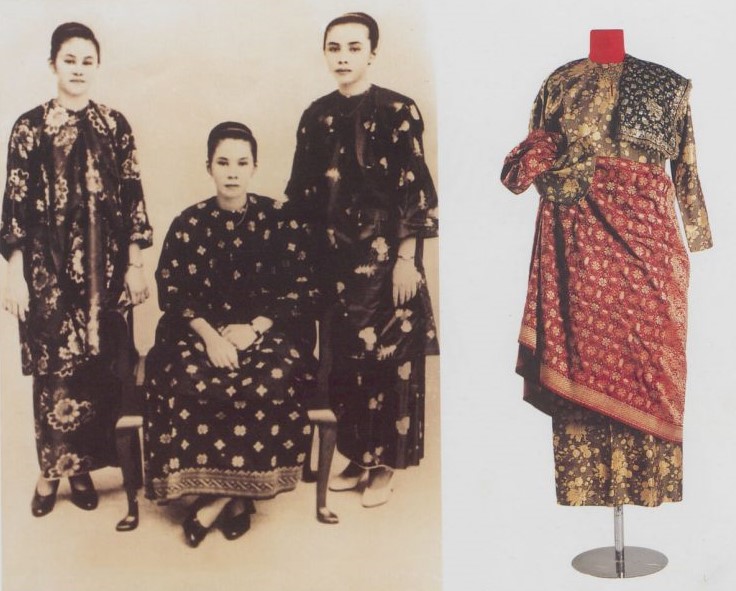
Johor’s Women’s Attire (Source: Johor Malay Fashion)
The younger generation prefers to have the sarong made of other fabrics and different colours and designs. The sarong that extends to the ankles is folded in a wavy fashion to reflect femininity. The folds are tied either on the left or right side and secured with a thin belt. In modern times a zipper replaces the belt, and the pleats are sewn. A headscarf or hijab of various designs and colours and a pair of slippers or shoes complement the dress.

 English
  Malay
Malay