
The Old Johor Sultanate (1528-1855) was a feudalistic society. At the apex was the Ruler, who was expected to rule with the assistance of his relatives and advisors. Traditionally, the Ruler bestowed titles and honorifics on his advisors, relatives, nobles and chieftains who possess knowledge, capabilities, and high integrity. They were bestowed with certain powers, privileges and authority. The Bendahara is designated as the principal officer after the Ruler and takes charge of the internal affairs of the palace and the treasury. The Temenggong is the officer in charge of internal security and monitors the people's progress. The Laksamana is the admiral that takes care of the security of shipping and trade. Generally, the people that assist the Ruler are bestowed the generic title of Bentara and are honoured with the ascribed title Dato’, as in Dato’ Paduka Raja, Dato’ Bendahara, Dato’ Temenggong and Dato’ Laksamana. The titles do not carry any badges or insignias.
Johor’s Orders Of Chivalry
Johor’s Orders Of Chivalry
Sultan Abu Bakar conferred ascribed titles to members of his Council of Ministers as a sign of status and authority, although the person holding the office is not himself titled. Thus the ascribed titles Dato’ Menteri Besar, Dato’ Sri Amar DiRaja, Dato’ Bentara Luar, Dato’ Bentara Dalam, Dato’ Sri Setia Raja, Dato’ Hakim, Dato’ Mufti. Dato Kadhi, Dato’ Penggawa Barat, and Dato’ Penggawa Timur were bestowed on them.
Sultan Abu Bakar conferred the Most Honourable Order of the Crown of Johor, which was created in 1886 and carried the title Dato’ to members of his Cabinet. The titles have ceased to be used. However, as a measure of preserving traditions, court officials appointed by the ruler for royal ceremonies are permitted to use the titles Dato’ Penghulu Biracana (Grand Steward), Dato’ Penghulu Istiadat (Grand Master of Ceremonies), Dato’Bentara Kanan and Dato’ Bentara Kiri (Assistant Masters of Ceremony), and Dato’ Penghulu Istana (Comptroller of the Palace) during the performance of their duties. The ascribed title of Dato’ Perdana Dalam (Grand Chamberlain) is used to this day, but the position is now a palace establishment.
The Most Esteemed Order Of The Royal Family
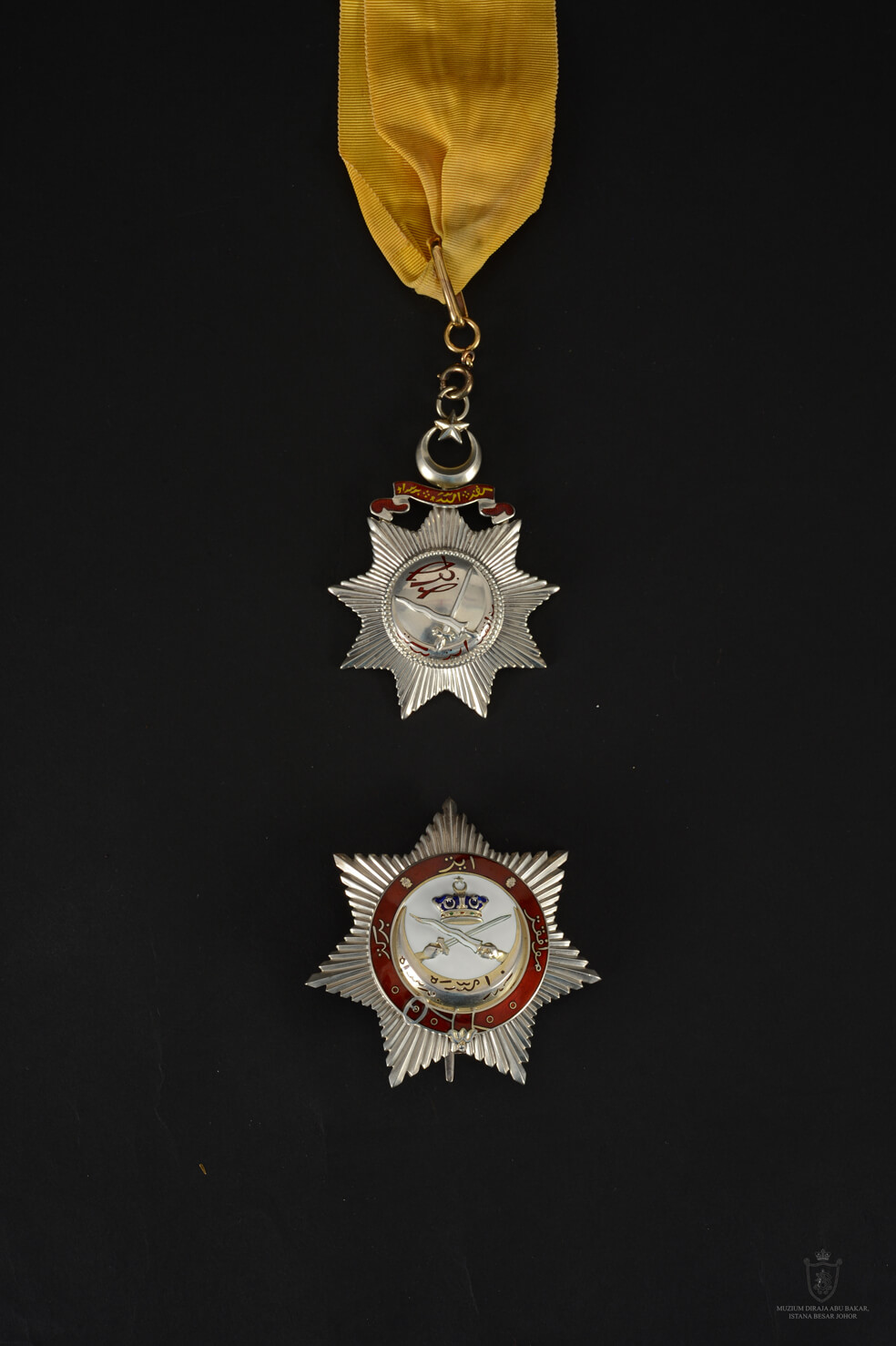
The Most Esteemed Family Order was instituted on 30 July 1886 and consisted of two designated classes of membership DK I and DK II. The motto of the Order is "Muafakat Itu Berkat" (Concord Is a Blessing). The First Class of the Order is confined to the Johor Royal Family, rulers of other states, and foreign sovereigns. The second class is conferred to foreign princes, or any Johor leader of the Malay race, and heads of state that have exhibited loyalty and contributed to the development of the state. There is no title for the Family Order as the recipients are natural-born members of royalty whose position and rank supersede the title.
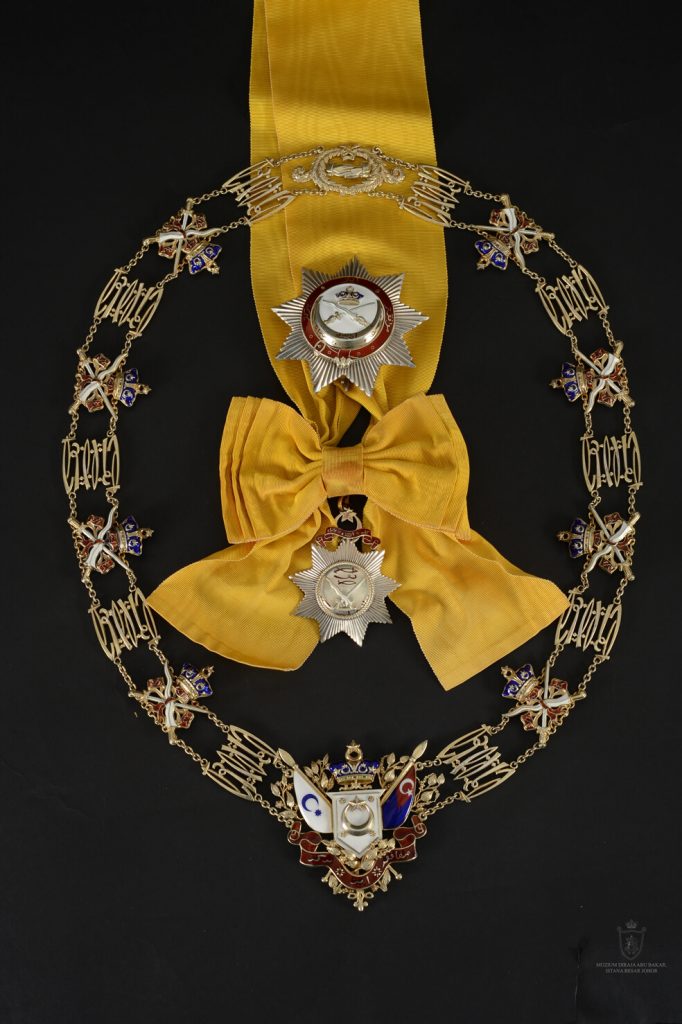
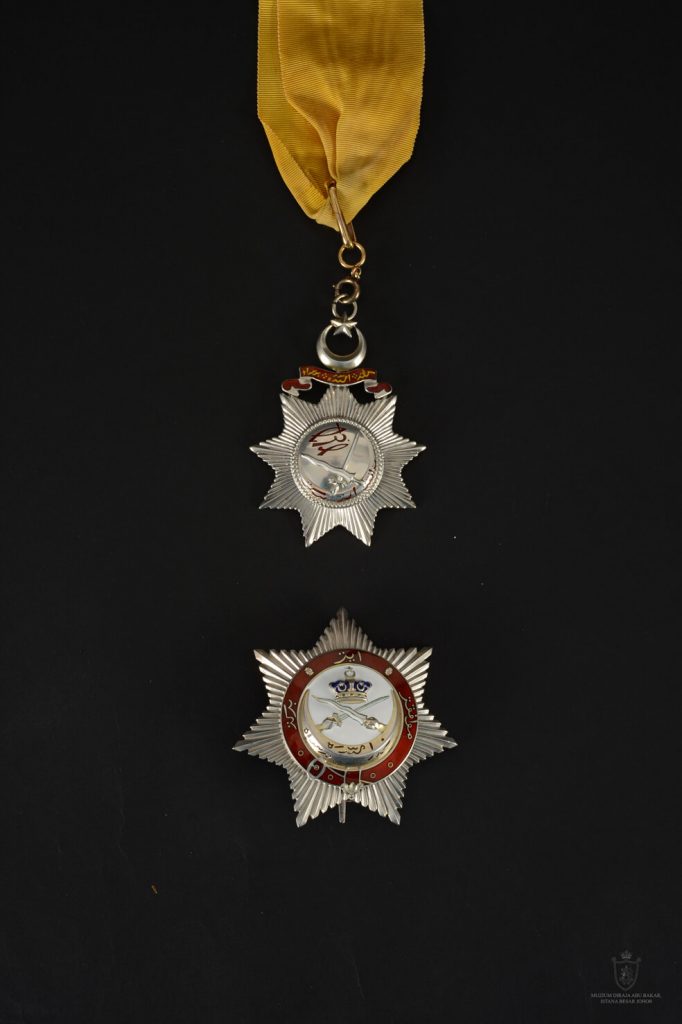
The First Class of the Order consists of a collar in gilt and enamel and is made up of alternate links of the cypher of Sultan Abu Bakar in Arabic script. The front device consists of a white shield bearing the crescent, and the star (the symbol of Islam) is flanked by the Royal Standard on the right and the State flag on the left, surmounted by a crown. Below it is a scroll bearing the motto of the Order in Jawi, “Muafakat Itu Berkat” (Concord is a Blessing). The breast badge is silver and gilt nine-pointed, multi-rayed star 90mm in diameter. In the centre is a red enamelled garter bearing the motto of the Order and encircling a white field on which is a gold crescent, crossed sword and kris, and a crown. The name of Allah is inscribed on the crescent in Jawi. An 86mm wide yellow silk sash and a 56mm sash badge complement the Order.
The Second Class breast badge is slightly smaller at 78mm in diameter and with seven points, and a neck badge is 56mm in diameter with a 50mm ribbon.
The Most Honorable Order Of The Crown Of Johor
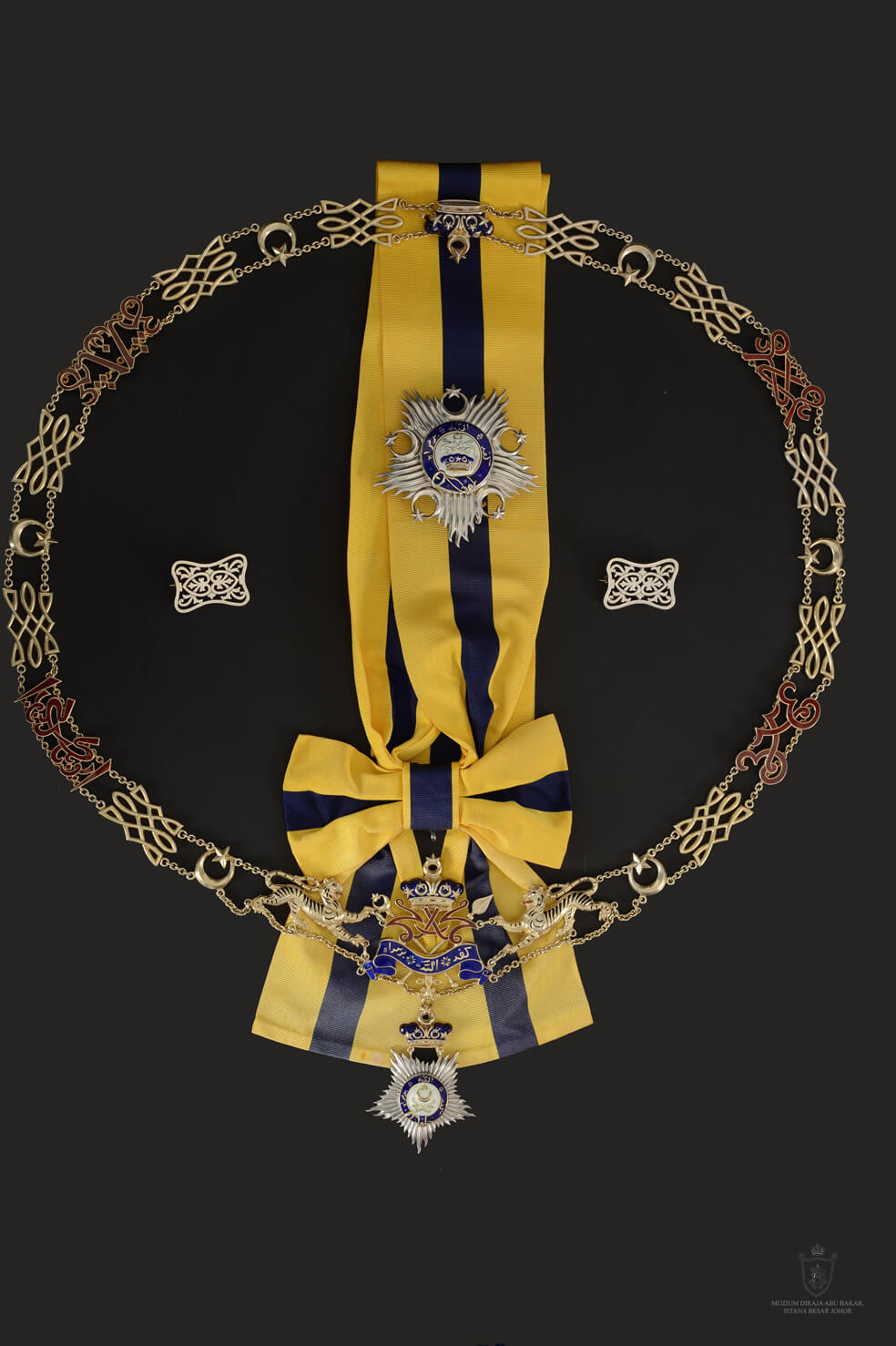
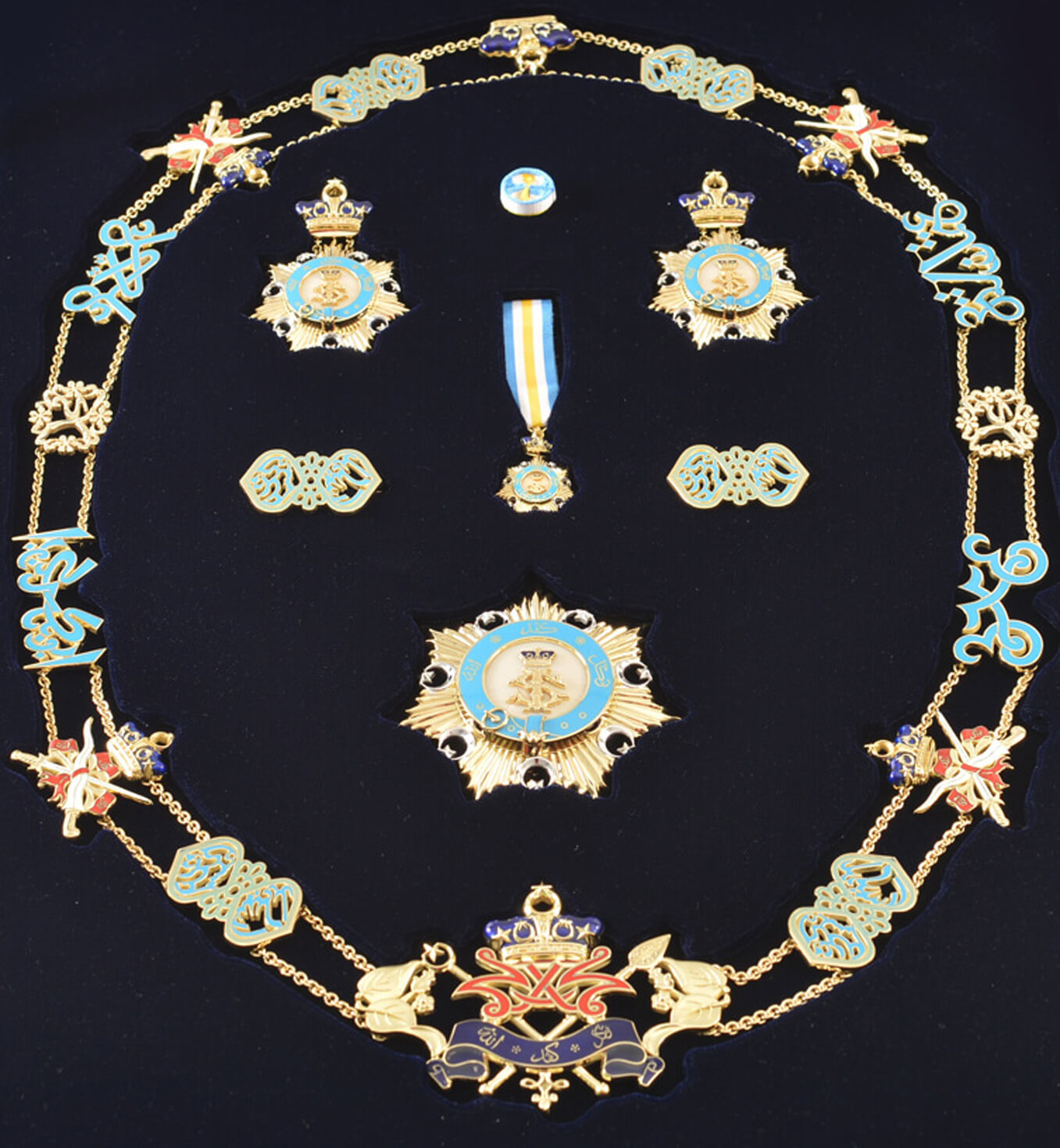
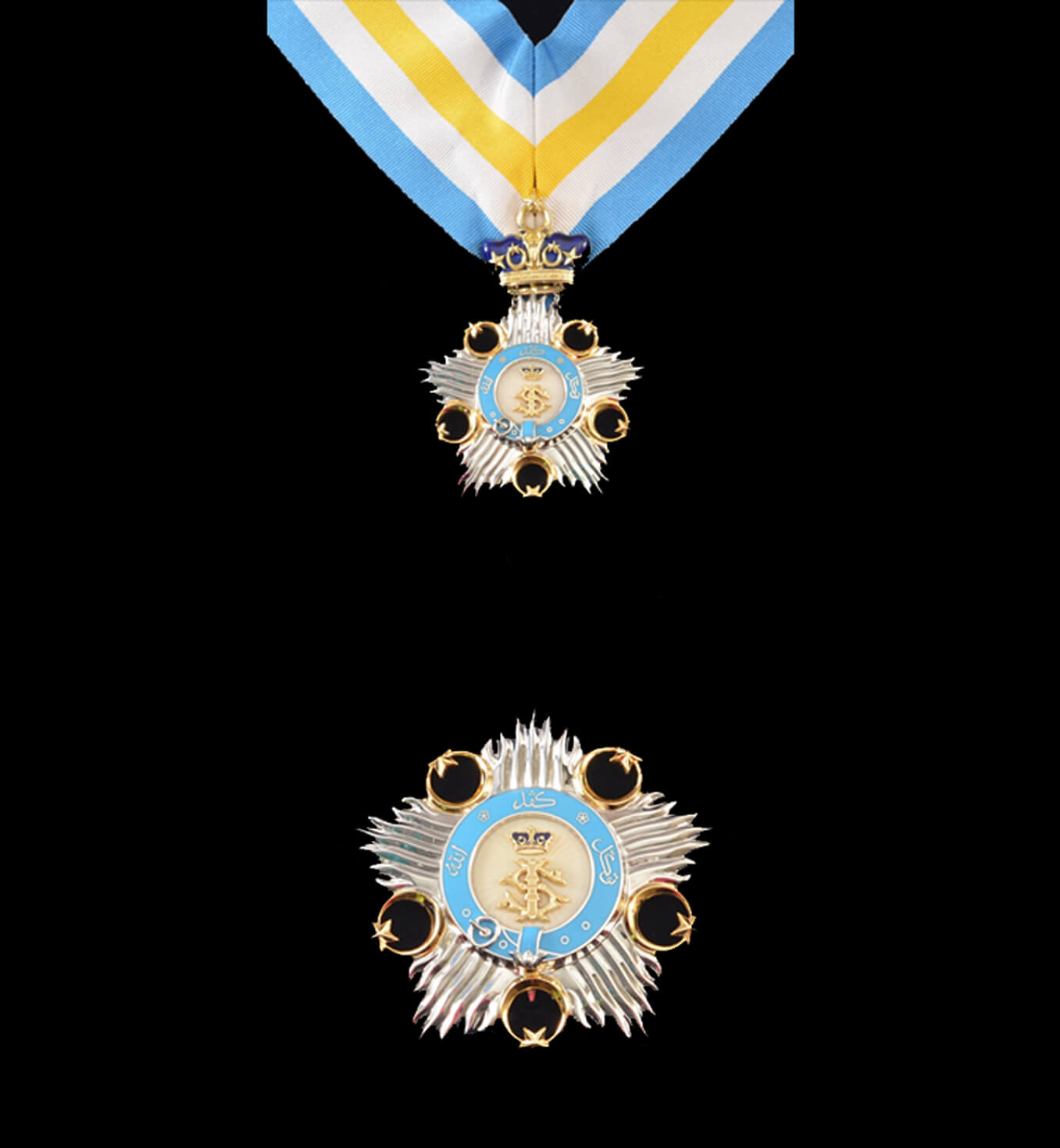
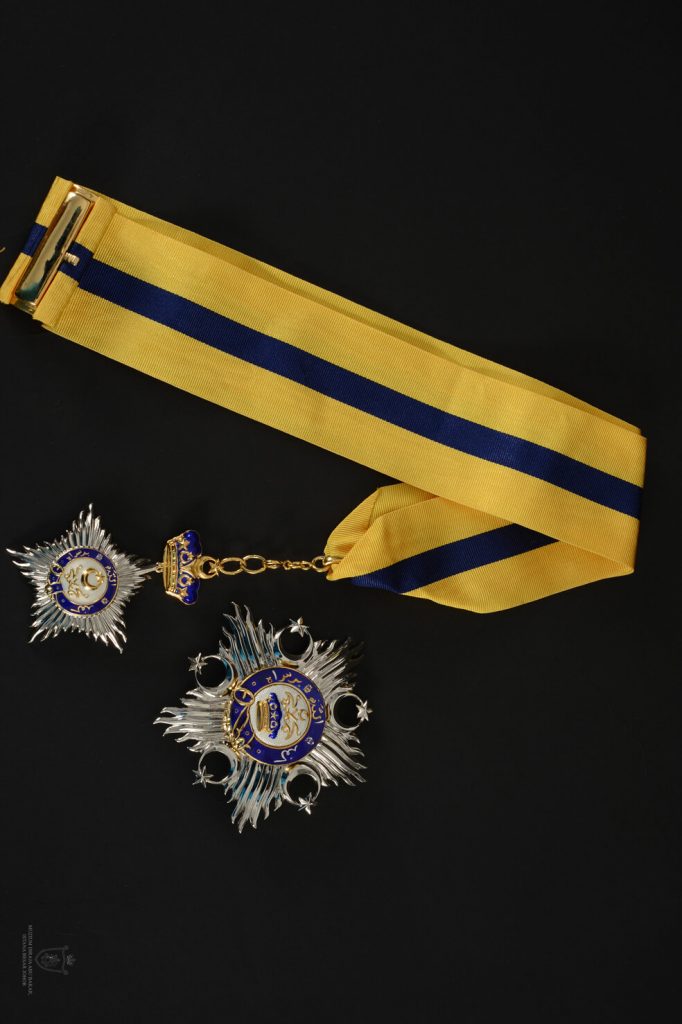
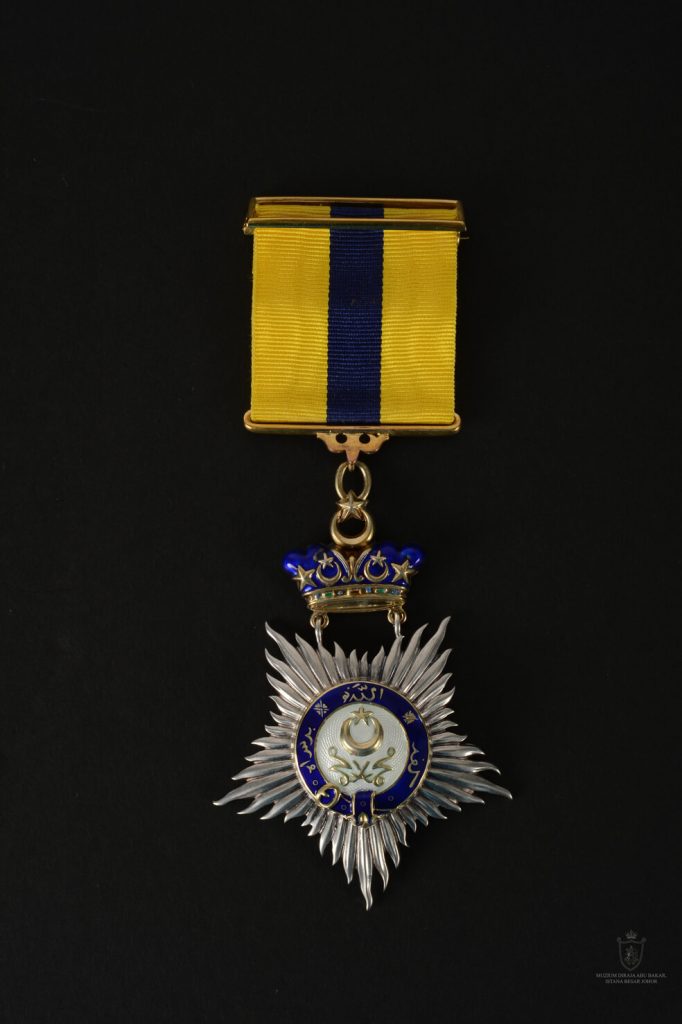
The Order of the Crown of Johor, with the motto Kepada Allah Berserah (Unto Allah Resigned), was instituted on 30 July 1886 with three designated membership classes. The First Class Grand Commander, known as Dato’ Sri Paduka Mahkota Johor (SPMJ), consists of a gilt and enamel collar made up of links in the form of the cyphers in Arabic of Prophet Muhammad’s principal disciples and companions Abu Bakar, Othman, Omar and Ali. The front device, supported by two golden tigers, is the name of the Prophet in Arabic, surmounted by a crown and flanked by the Mace of Religion on the left and the Mace of the Universe on the right, with a blue scroll below bearing the motto of the Order in Arabic “Kepada Allah Berserah” (Unto Allah Resigned). The First Class breast star, 90 mm in diameter, is made of silver and designed with five flame-like rays with gold crescents and stars between the rays. The centre is encircled by a blue garter bearing the motto of the Order and consists of a white field with a crown, the name of the Prophet in Arabic and the crescent and star. An 86 mm sash in yellow with a broad blue centre stripe and a sash badge 58 mm in diameter complete the insignia.
The Second Class (Commander), known as Dato’ Paduka Mahkota Johor (DPMJ) consists of an 86mm star of the same basic design but with a crescent and stars between the rays in silver, a neck badge 0f 56 mm hanging from a 50mm wide ribbon in watered yellow with a blue strip in the centre.
The First and Second Classes of the Order carry the title “Dato'" for its male members and Datin Paduka for lady members. The third class Companion (Setia Mahkota Johor SMJ) does not carry any title.

The Most Blessed Order Of Sultan Ismail Of Johor
The Most Blessed Order of the Sultan Ismail of Johor is a personal Order created on 28 October 1974 by Sultan Ismail (r. 1959-1961). Its motto is “Taat dan Setia” (Loyalty and Obedience). The Order has two classes styled and designated as Grand Commander (Dato’ Sri Setia Sultan Ismail (SSIJ), and Commander (Dato’ Setia Sultan Ismail (DSIJ), both carrying the title Dato’ for male members and Datin Paduka for lady members. In 2015 His Majesty Sultan Ibrahim decreed the Order to be dormant.

The Most Exalted Order Of Sultan Ibrahim Of Johor
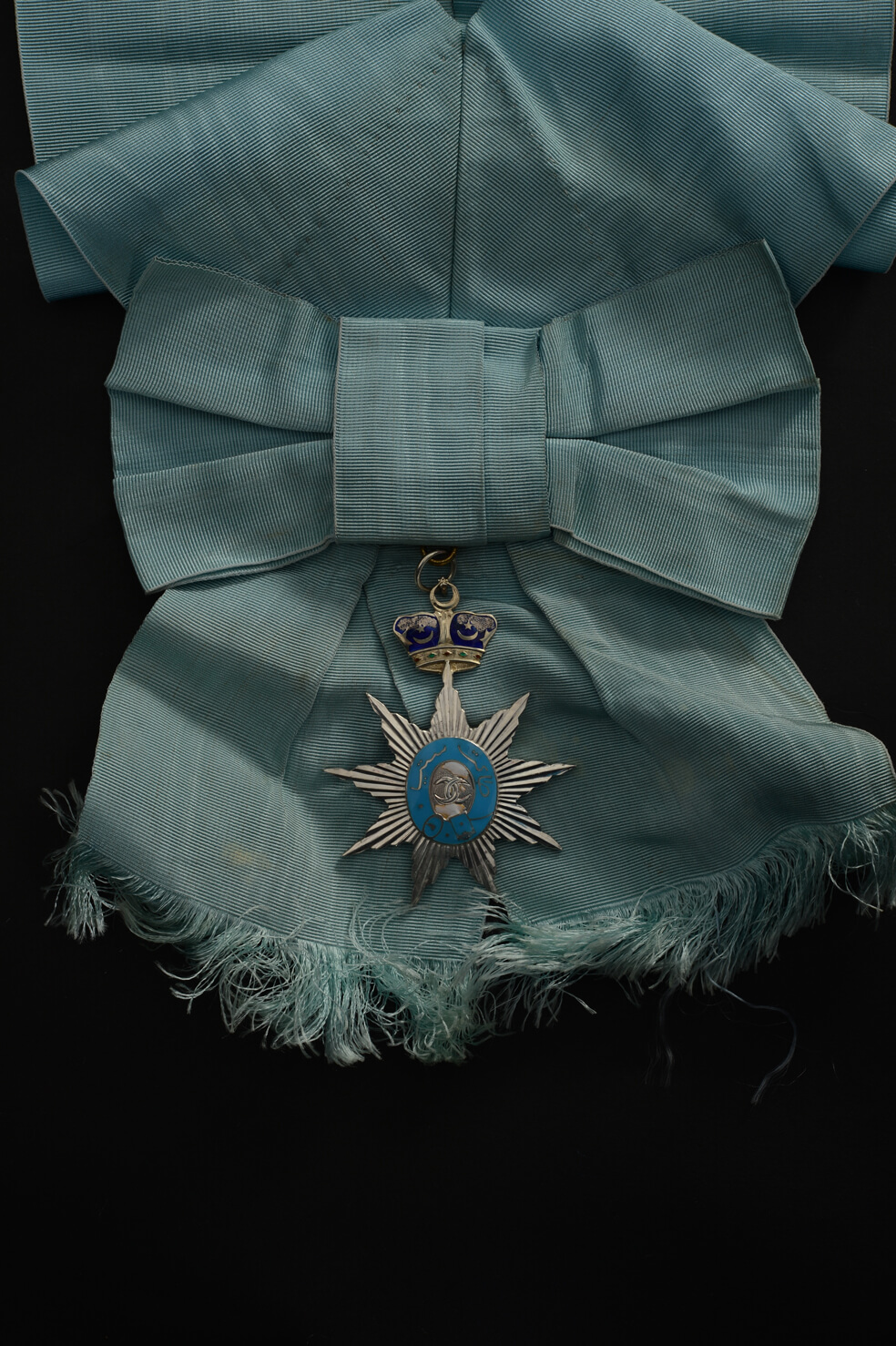
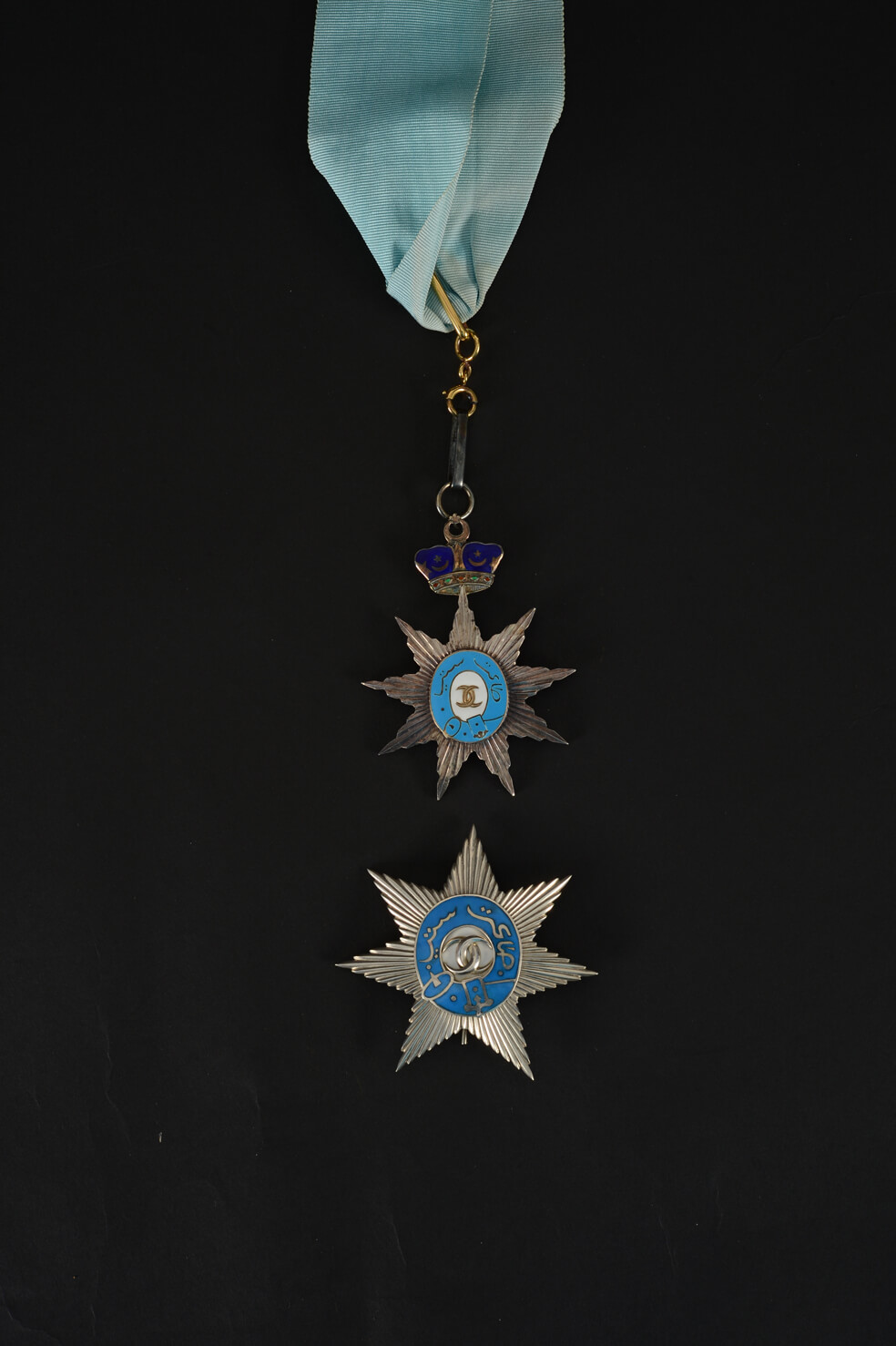
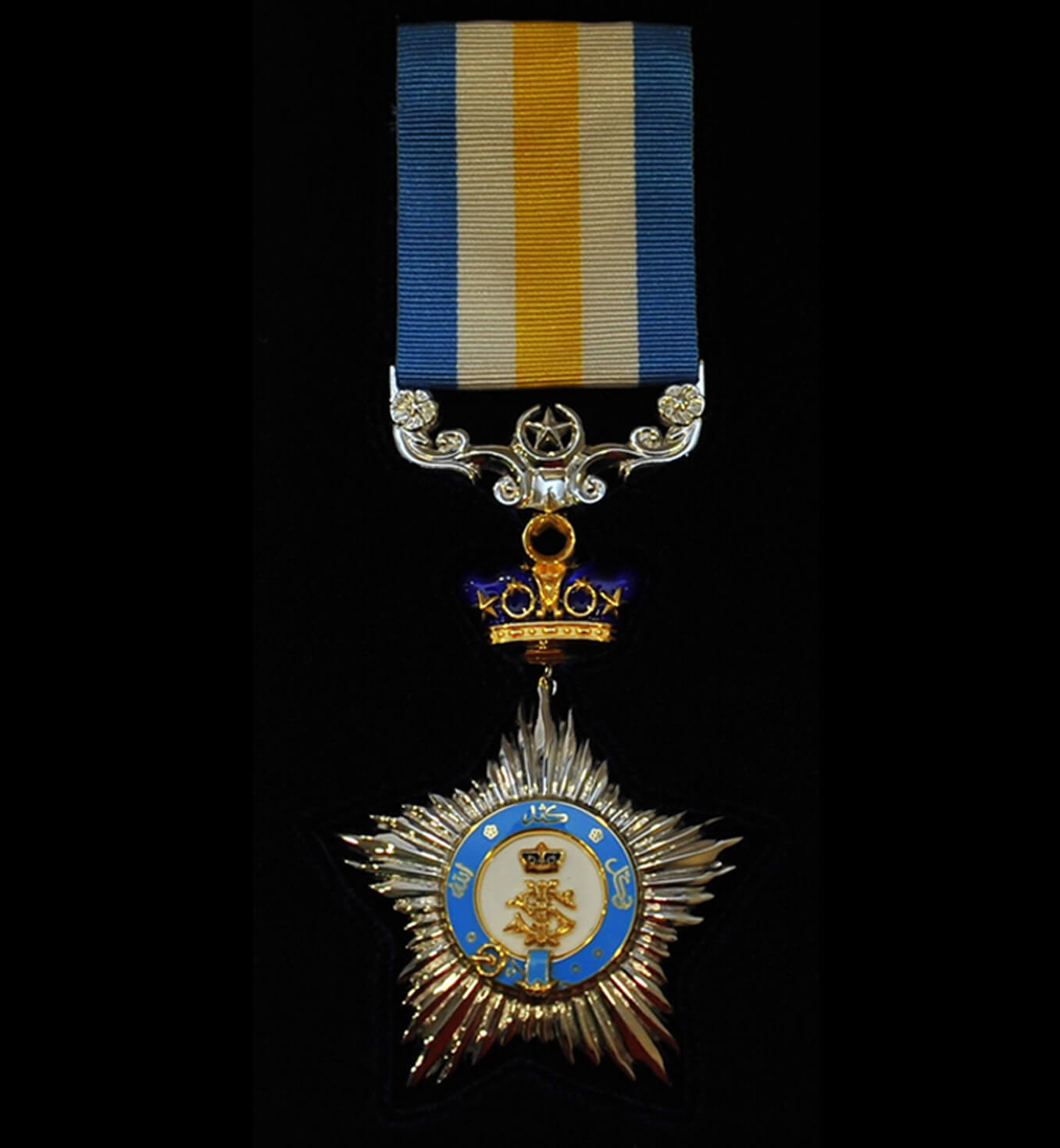
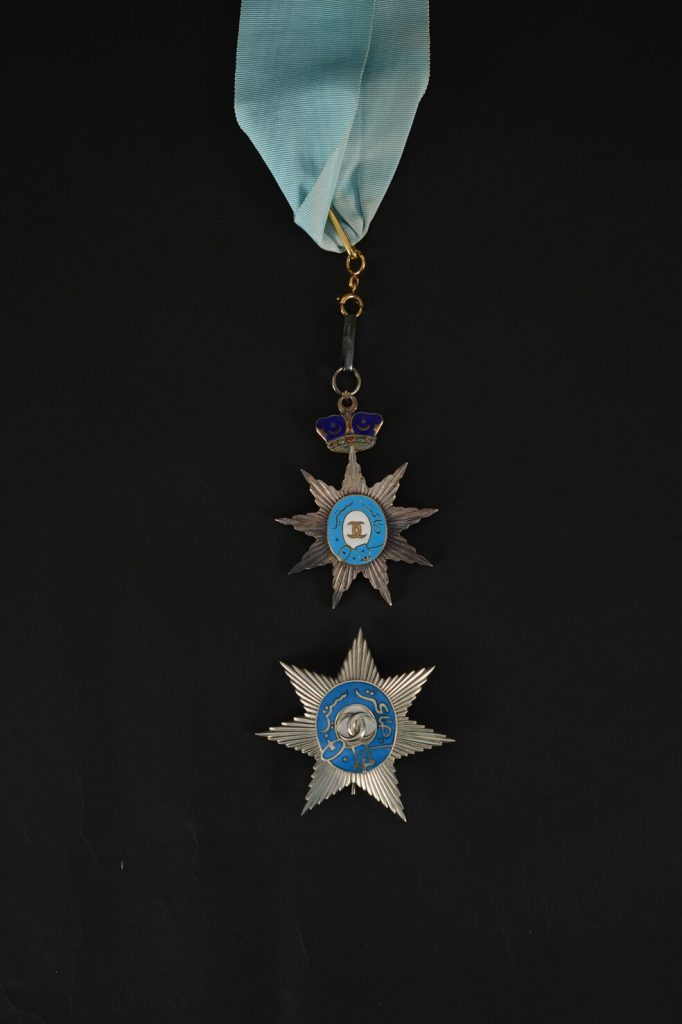
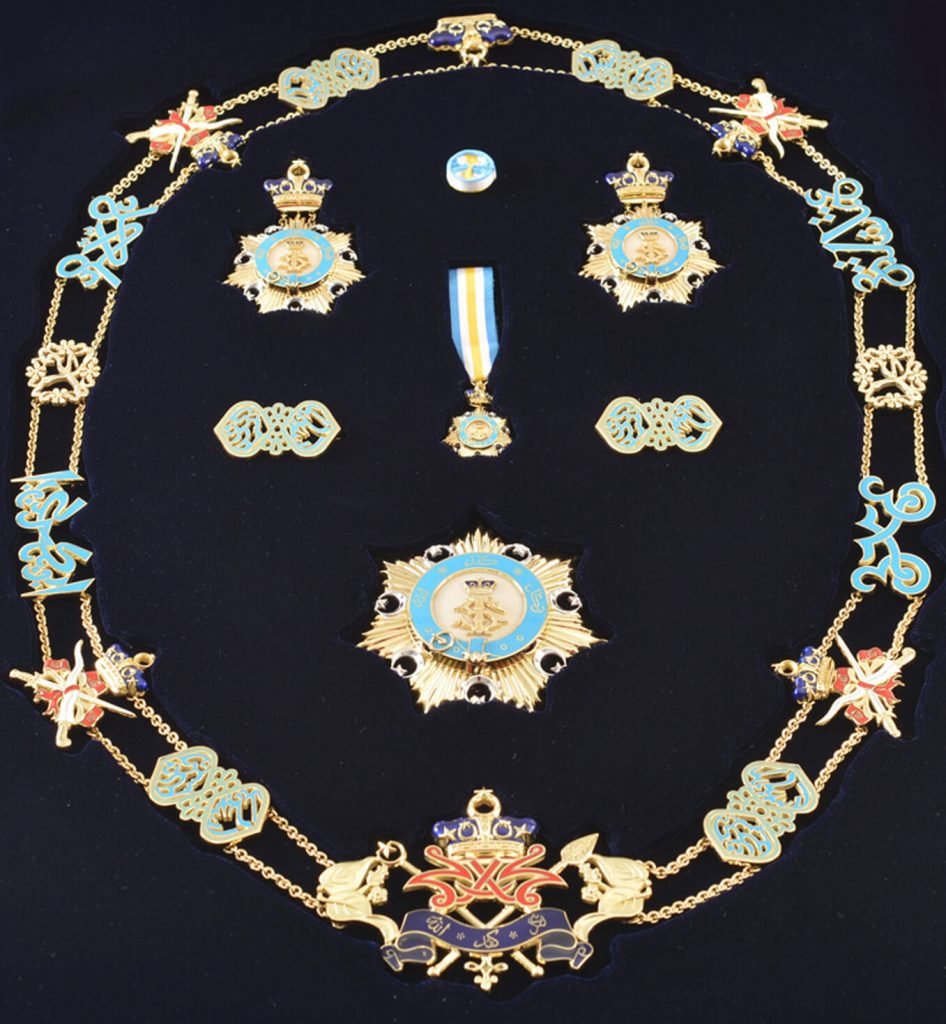
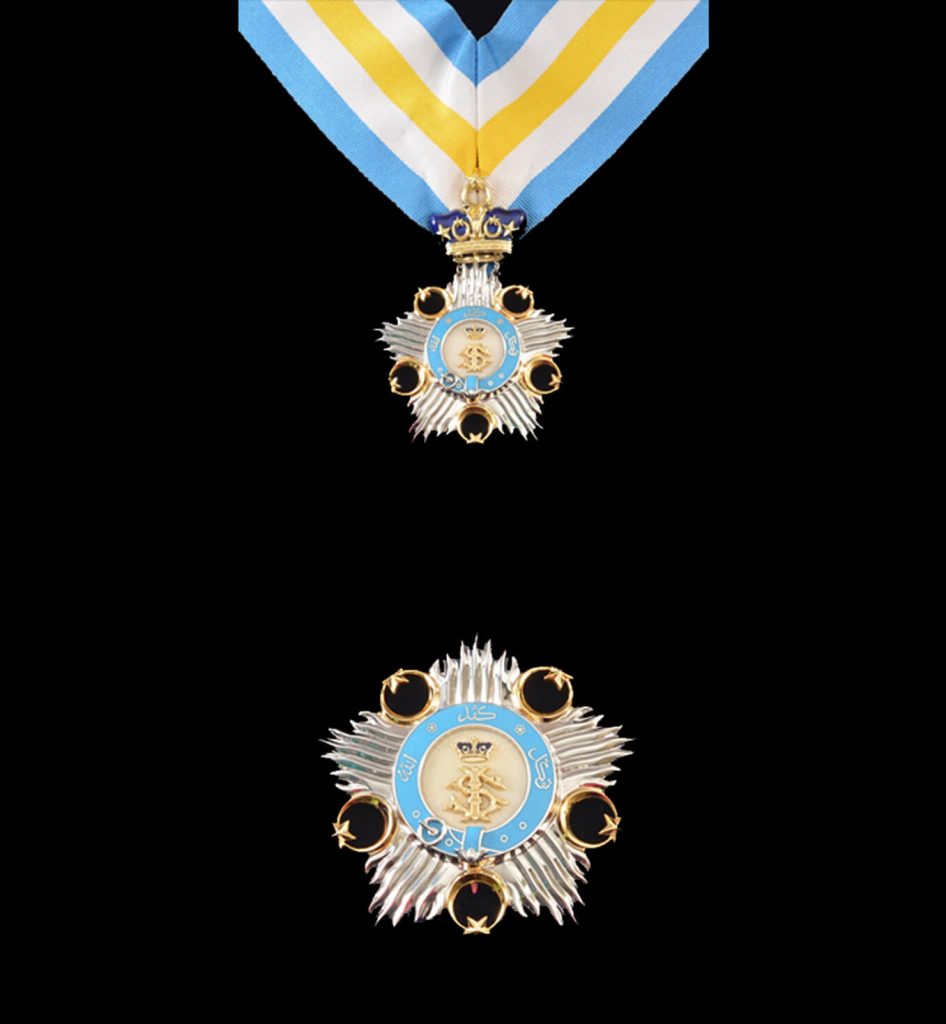
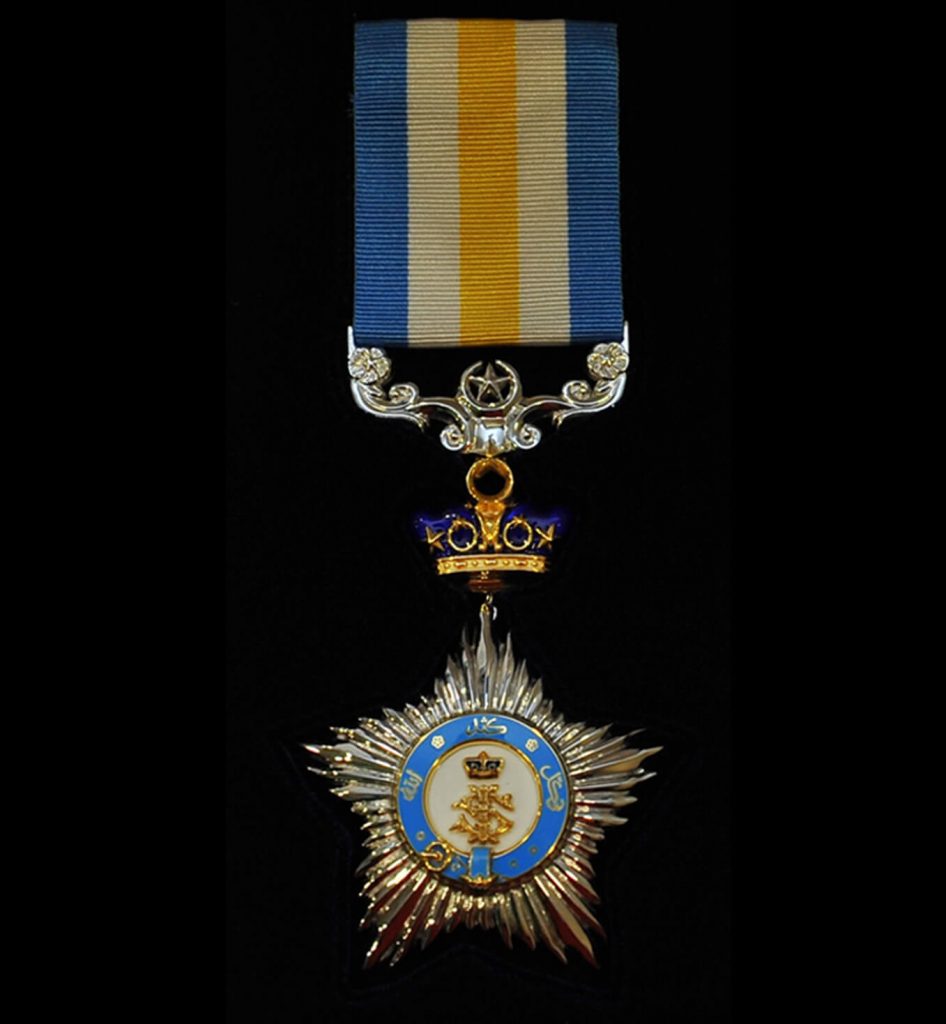
The Most Exalted Order of Sultan Ibrahim of Johor was instituted on 23 March 2015 in conjunction with the Coronation of His Majesty Sultan Ibrahim Ibni Almarhum Sultan Iskandar has three designated classes. The First Class (Grand Commander) Dato’ Sri Mulia Sultan Ibrahim Johor (SMIJ) consists of a gilt and enamel collar with alternate links in the form of the names of Prophet Mohamad’s Companions Abu Bakar, Othman, Omar and Ali in Arabic in blue enamel. The front device is the name Prophet Mohamad in Arabic in red enamel, flanked by the Mace of Religion on the right and the Mace of the Universe on the left, and surmounted with a crown. Below is a blue scroll with its motto Tawakal Kepada Allah(Resigned Unto Allah) in Arabic. The breast badge is a 90mm star made of silver with seven flame-like rays, a silver crescent, and stars between the rays. In the centre is the Sultan’s monogram “SI”, topped with a crown encircled by a blue garter bearing the motto of the Order. A 56mm sash badge is attached to an 86mm wide sash with five equal stripes of blue, white, yellow, white and blue.
Pangkat Kedua (CommanderThe Second Class consists of a breast star of similar design 86 mm across with five flame-like rays with gold crescents and stars between the rays, and a 58 mm neck badge with a 50mm wide ribbon. The Third Class has a 58mm badge with a 36mm ribbon. neck badge 56 mm dan reben 50 mm. Pangkat Ketiga Setia Mulia (Companion) terdiri daripada bintang kecil 56 mm digantung pada reben 38 mm.
Kuasa Kurniaan
Kuasa kurniaan darjah adalah hak mutlak DYMM Sultan sebagai Raja dan Kepala Darjah dengan telek pandang dan limpah perkenan Baginda yang amat sangat sebagaimana termaktub di bawah Fasal 7(2)(f) UUTKJ. Antara orang yang layak dipertimbangkan ialah kerabat diraja, putera Raja asing, pegawai-pegawai tinggi kerajaan, tokoh ilmuwan, penggerak sosial dan pemimpin yang turut sama membangunkan dan memajukan negeri. Sebelum menerima kurniaan, calon Melayu dan Islam menunaikan solat sunat taubat, diikuti dengan membaca sumpah syarie di hadapan Mufti dengan berikrar mengukuhkan taat setia kepada Raja dan Allah S.W.T., menjauhkan diri daripada perbuatan yang ditegah oleh agama Islam, patuh kepada undang-undang serta memelihara maruah dan integriti. Sebelum dan selepas kurniaan, mereka dimuliakan dengan bacaan doa oleh Mufti memohon perlindungan dan peliharaan Allah S.W.T.
The Sovereign, as Chief of an Order under Article 7(2)(f), possesses the sole authority and prerogative and may confer an Order to any eligible person at his absolute discretion and wisdom. Among those that can be considered are foreign royalties and princes, high-ranking government officials who have rendered extraordinary services and whose talents, virtues and loyalty participated in the development of the State. Before the investiture, Malay Muslim candidates perform a non-obligatory prayer for repentance and recite a Syarie oath before the Mufti, pledging to renew loyalty to Allah and the Ruler and abstain from committing sinful acts, to obey the laws, and maintain decorum, dignity and integrity. Before and after the investiture they are blessed with prayers from the Mufti invoking Allah for divine protection. Clause 13 of the Statutes and Ordinances of an Order provides the Ruler with the power and right to degrade and expel a member of an Order who has disobeyed the oath or been convicted of treason, felony or any grave offence considered derogatory to a man of honour. Johor does not have a welfare association or any society for the Members of an Order. The Dato’s do not possess any rights, privileges or symbols. The responsibility of a Johor Dato’ is to uphold and strengthen the sovereignty of the Sovereign, of the Order and to maintain good values and integrity at all times. Ordinary Members of Malay Muslim Dato’s who are citizens of the State are made and included as members of the Council of the Supporters of the Country, which meets after the passing of a Ruler and is responsible for confirming the appointment of the Heir Apparent as the new Ruler.
The Uniqueness Of Johor’s Orders Of Chivalry
Johor’s Orders of Chivalry is unique and differ from other states. The Orders were created in 1886, and their Statutes and Ordinances are based on the English Orders of Saint Michael and Saint George that do not have any difference in honorifics for its members. Members of the First Class Knight Grand Cross (GCMG) and the Second Class Knight Cross (KCMG) are knighted and titled “Sir”. Following this procedure, Johor does not use the title Dato’ Sri even though the First Class Grand Commander is called Dato’ Sri Paduka Mahkota Johor. Sultan Abu Bakar, in his wisdom, did not wish to differentiate the title to avoid competition among Members. Further female members of the CGMC and the KCMG are titled Dame. The Statutes and Ordinances of the Johor Orders stipulate female Members of the First Class and the second Class as Dato’. In 1986 Sultan Iskandar, through a Government Circular SUKJ 338/1-8 dated 30 March 1986, decreed this honorific to be replaced with the title Datin Paduka for female Members.
The second uniqueness is that a Johor Dato’ has the prefix Yang Berhormat (His Excellency), an honorific bestowed by Sultan Abu Bakar on members of his Cabinet in 1868. This honorific differs from the Yang Berhormat (YB) (The Honourable) prefix of members of Parliament or the State Assembly created in 1948. Other states have the prefix Yang Berbahgia (YBhg) (The Fortunate) for the Dato’s.
The third uniqueness is that the wife of a Johor Dato’ is not titled Datin since the conferment is made on her husband. The wife of a member of a GCMG or KCMG is called “Lady”, followed by the husband’s name. For example, the wife of Sir Winston Churchill is addressed as Lady Churchill. It follows that the wife of Dato’ Abdul Rahim is addressed as Datin Dato’ Abdul Rahim, abbreviated as Datin Rahim. This honorific is only for the first wife. She is entitled to the honorific after her husband's death unless she remarries. If the wife of a Dato’ passes away and he remarries, the new wife is entitled to the honorific.
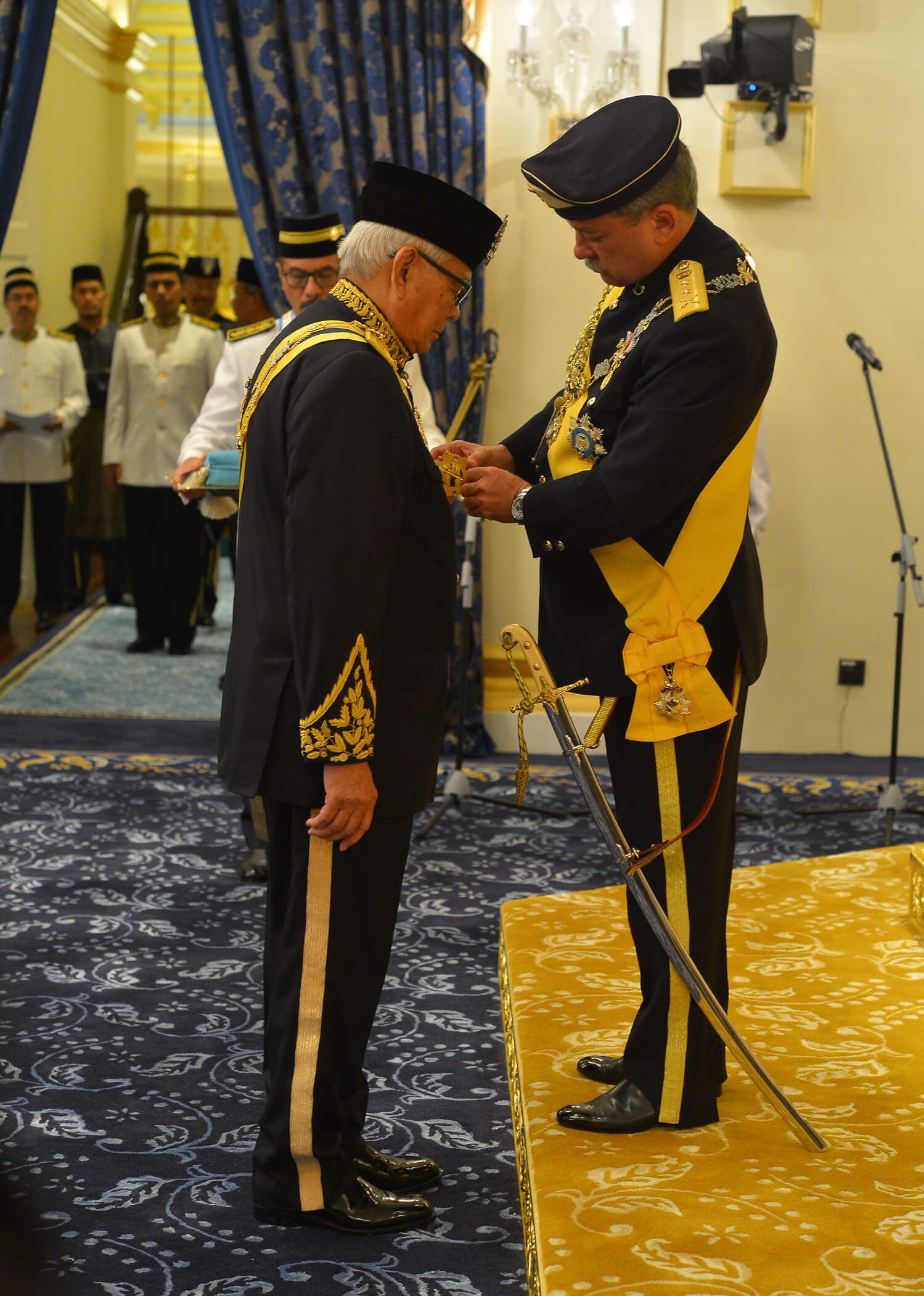
Investiture Ceremony. (Source: The Royal Abu Bakar Museum)
The Wisdom Of Abu Bakar
In order to preserve the dignity and sovereignty of the Orders of Chivalry, Abu Bakar, in his wisdom, advised that although it is not forbidden for the sovereign to make, create and institute other orders, he cautioned against making new orders as contained in Article 63 of the Constitution.
“It is reminded that no other Order shall be made, created or instituted merely for the sake of increasing and multiplying the number of Orders, without considering carefully and well whether it would be useful and desirable to create new Orders because too great a number and too much display of tokens of honour and dignity will have the effect of diminishing their estimation and value”.

 English
  Malay
Malay